
Estonia gives high school students free ChatGPT access in pilot program
- By Kumail Shah -
- Jun 08, 2026


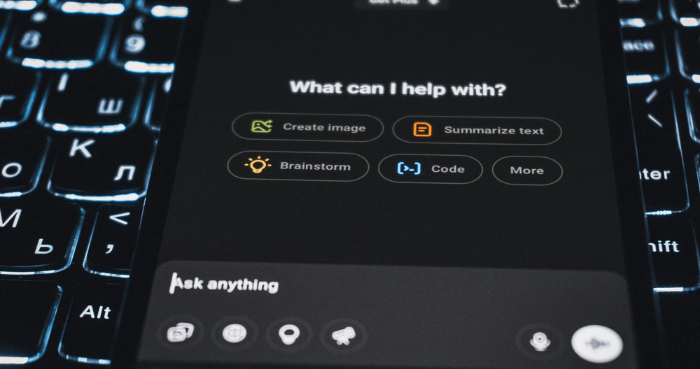
While many school districts worldwide are debating restrictions on artificial intelligence, Estonia has implemented a nationwide pilot program providing nearly 20,000 high school students with free access to personalized chatbots.
As reported by The Wall Street Journal, this initiative focuses on 10th and 11th-grade students across Estonia. It stands as one of the earliest large-scale efforts to integrate generative AI into the core of the education system.
Acknowledging that students frequently use chatbots for homework, Estonian officials deemed bans impractical and instead opted to redesign teaching methods.
Collaborating with OpenAI and Google, the country developed specialized “Socratic” educational versions of ChatGPT and Gemini specifically for classroom application. Unlike standard chatbots that provide direct answers, Estonia’s AI tools are designed to guide students through complex reasoning and problem-solving.
To safeguard human thinking from AI replacement, teachers are trying new teaching methods. For instance, one English class involved students in role-playing conversations with ChatGPT, as if they were guests at the 1816 gathering where Mary Shelley conceived Frankenstein. Other schools use chatbot-assisted activities for homework, allowing more class time for in-depth analysis.
Educators continue to worry about “AI brain rot”—the concern that students may become overly dependent on chatbots and neglect developing their independent critical thinking skills.
Researchers from Stanford University and OpenAI are investigating how the integration of AI affects reasoning, retention, and learning behaviors, with initial findings expected later this year.
Student responses vary; many use the tools to brainstorm and explore topics, while some try to circumvent restrictions to find direct answers. A smaller group rejects AI altogether, citing ethical or environmental concerns or fear of intellectual dependence, with one student mentioning worries about “brain atrophy.”
The stakes extend far beyond the Baltic nation. OpenAI reportedly views Estonia as the first step in a broader global rollout of educational AI systems for secondary schools. Rather than removing AI from classrooms, Estonia is attempting to turn the technology into a thinking partner rather than a shortcut, potentially making it the world’s most important test case for modern education.