
Europe new entry/exit system- a short guide
- By Web Desk -
- Apr 25, 2026


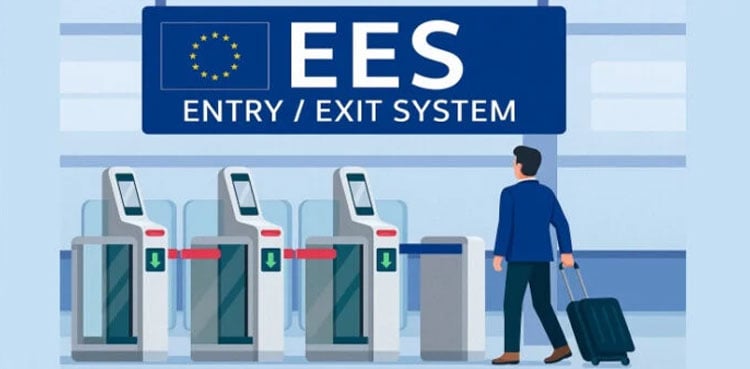
What is the EES Entry/Exit System (EES)? Introduction
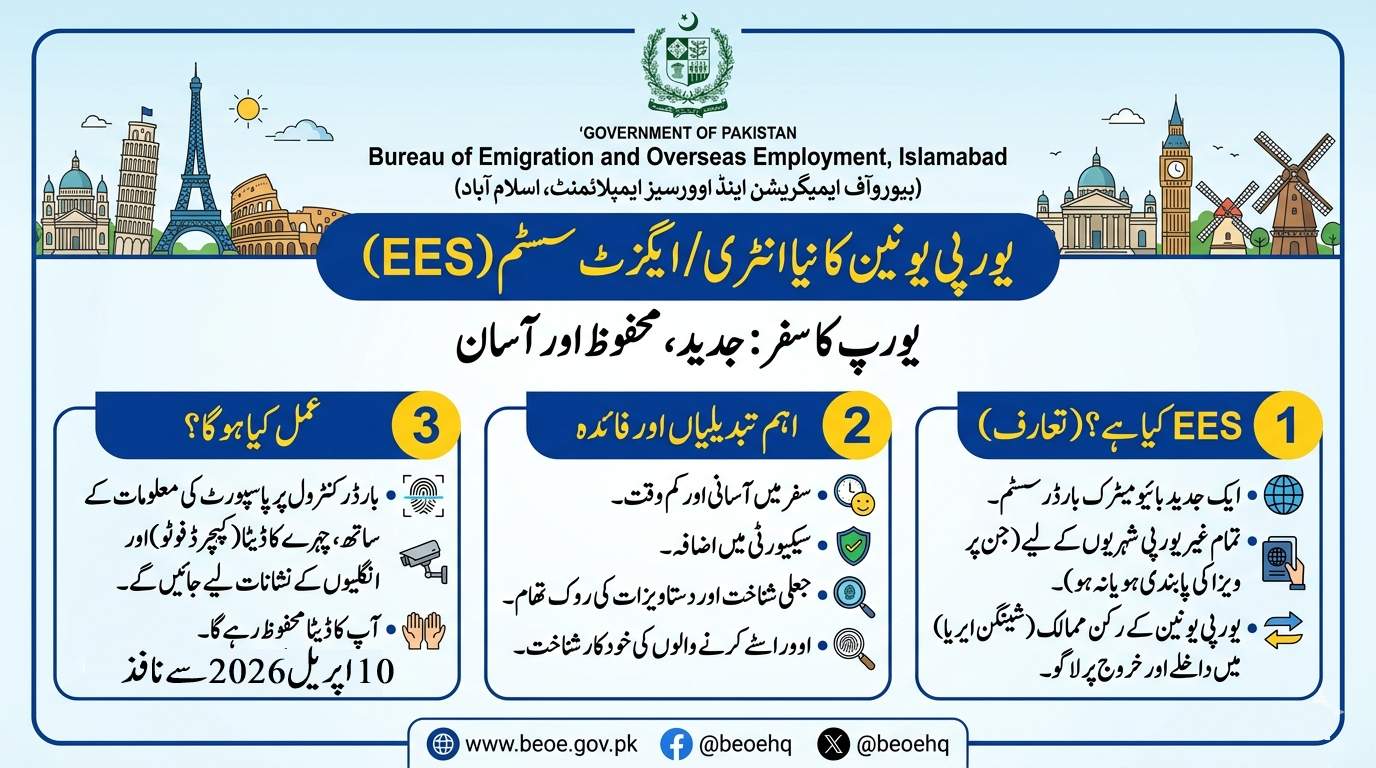
The EES is an automated IT system for registering non-EU nationals travelling for a short stay, each time they cross the external borders of 29 European countries using the system.
As of 10 April 2026, the EES replaces the stamping of passports, allowing the automatic detection of overstayers (travellers who have exceeded the maximum duration of their authorised stay).
Vital Changes and Benefits
The EES contributes to the prevention of irregular migration and helps protect the security of everyone living in or travelling to Europe.
The system also enables more efficient identification of overstayers as well as of those who attempt to cross the borders using fake or forged documents.
Process
The system registers the person’s name, travel document data, biometric data (fingerprints and captured facial images) and the date and place of entry and exit, in full respect of fundamental rights and data protection. It also records refusals of entry.
In addition to this, the system allows a wider use of automated border control and self-service systems, which are quicker and more comfortable for the traveller.
The European Agency for the operational management of large-scale IT systems in the area of freedom, security and justice (eu-LISA) is responsible for developing and managing the system.
Background
The EES is among the measures undertaken as part of the Security Union and will help achieve the objectives of the European Agenda on Security and the European Agenda on Migration in particular regarding border management and preventing cross-border crime and terrorism.
The European Commission presented the proposal for EES on 6 April 2016 as part of the revised Smart Borders Package. After negotiations with the European Parliament and the Council the co-legislators reached an agreement in July 2017.
The EES Regulation, together with a targeted amendment of the Schengen Border Code, were adopted on 20 November 2017 and entered into force on 29 December 2017.
On 4 December 2024, the Commission proposed to introduce a progressive start of operations for the Entry/Exit System (EES). On 19 May 2025, the European Parliament and the Council reached an agreement.
The Regulation (EU) 2025/1534 on temporary derogations from certain provisions of Regulations (EU) 2017/2226 and (EU) 2016/399 as regards the progressive start of operations of the Entry/Exit System was adopted on 18 July and entered into force on 26 July 2025.
On 30 July 2025, the Commission set 12 October 2025 as the launch date for the progressive start of operations of the Entry/Exit System (EES).
The system became fully operational on 10 April 2026.