
Gold prices decline in Pakistan - July 10, 2026
- By Anjum Wahab -
- Jul 10, 2026


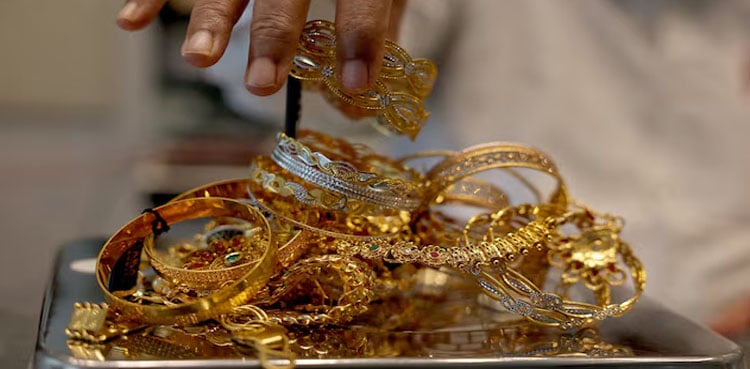
KARACHI: Gold prices in Pakistan declined on Friday, July 10, 2026, following a drop in international bullion rates despite continued geopolitical tensions in the Middle East.
According to the All Pakistan Sarafa Gems and Jewellers Association (APSGJA), the price of 24-karat gold per tola fell by Rs1,400 to Rs432,436.
Similarly, the price of 10 grams of 24-karat gold decreased by Rs1,200 to Rs370,744, while 10 grams of 22-karat gold dropped by Rs1,100 to Rs339,861.
In the international market, gold prices declined by $14 to $4,100 per ounce.
Meanwhile, silver prices moved higher. The price of silver per tola increased by Rs11 to Rs6,432, while 10 grams of silver gained Rs10 to reach Rs5,514.
In the global market, silver rose by $0.11 to $59.53 per ounce, the association said.
Gold prices have remained volatile amid escalating geopolitical tensions in the Middle East after the United States launched fresh strikes on Iran in an effort to keep the Strait of Hormuz open to commercial shipping. The escalation prompted Iranian attacks on Kuwait and Bahrain, raising fresh concerns over regional stability.
The conflict also pushed oil prices higher, with Brent crude rising about 1% to $78.80 per barrel, although prices remained well below the late-April peak of more than $120 per barrel.
Check here: SILVER RATE – DAILY UPDATES
Iranian media reported that the strikes targeted areas along the country’s southern coastline, stretching from the Strait of Hormuz to the Gulf of Oman. Among the locations reportedly hit were Bandar Abbas, home to Iran’s largest commercial port and key naval facilities, as well as the coastal cities of Konarak and Chabahar, near the Pakistan border.
Market analysts said geopolitical uncertainty, fluctuations in the US dollar and expectations surrounding global interest rates continue to influence precious metals markets. While gold is traditionally viewed as a safe-haven asset during periods of uncertainty, analysts noted that short-term price movements are also driven by profit-taking, changes in investor sentiment and central bank policy expectations.
They added that future gold prices are likely to depend on developments in the Middle East, upcoming economic data and monetary policy decisions by major central banks.