
H is for Hawk Review: Claire Foy Delivers a Restrained Yet Heartbreaking Performance
- By Nida Faraz -
- May 02, 2026


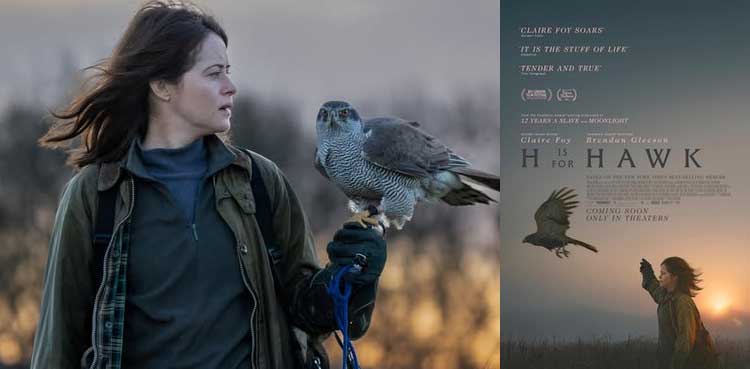
Adapted from Helen Macdonald’s award-winning 2014 memoir, H is for Hawk brings to the screen a deeply personal and unconventional story of loss, healing, and the profound connection between humans and the natural world. Directed by Philippa Lowthorpe and co-written with Emma Donoghue, the film stars Claire Foy in a tremendously authentic and psychologically raw portrayal of Helen Macdonald, a Cambridge academic and naturalist who grapples with overwhelming grief following the sudden death of her beloved father (played by Brendan Gleeson).
The narrative unfolds with quiet intensity as Helen, shattered by her loss, turns to the ancient and demanding art of falconry. Seeking solace in memories of birding outings with her father, she acquires and begins training a fierce wild goshawk named Mabel. What begins as a desperate attempt to fill an emotional void evolves into a complex, instinctual bond that mirrors Helen’s own journey toward acceptance and renewal. The film refuses easy sentimentality or a conventional Hollywood-style redemption arc, instead embracing the messy, unfinished nature of real grief—where progress is incremental, setbacks are inevitable, and healing emerges not through dramatic breakthroughs but through patient, watchful companionship.
Claire Foy soars in the central role, offering a performance that is restrained on the surface yet revelatory in its depth. Known for her poised, fastidious portrayals (most notably as a young Queen Elizabeth II in The Crown), Foy here reveals a raw fragility beneath Helen’s stoic British stiff-upper-lip exterior. She rarely sheds tears on screen, allowing the weight of sorrow to manifest through subtle gestures: a trembling hand, a distant gaze, or the quiet panic in her eyes during early, tense falconry sessions in her cramped apartment. Critics have praised this internalized approach, noting how Foy conveys the enormity of Helen’s pain without overt displays, distilling the memoir’s introspective prose into something visually and emotionally compelling.
The falconry sequences form the film’s emotional and visual heart. Lowthorpe captures the British countryside in idyllic, almost painterly splendor—rolling hills, golden light filtering through trees, and vast open skies that contrast sharply with Helen’s inner turmoil. Claire Foy‘s commitment shines through; having trained with real goshawks, her interactions with Mabel feel genuine and lived-in, from initial struggles with a restless, sharp-clawed predator to moments of serene harmony as bird and handler learn to trust one another. These scenes highlight the therapeutic power of nature, where the wildness of the goshawk parallels Helen’s own untamed grief, guiding her toward a delicate, instinctual peace.
Supporting performances add texture: Brendan Gleeson’s warm, grounded presence as the father lingers in flashbacks, underscoring the depth of Helen’s devastation, while the film thoughtfully explores themes of mental health, resilience, and the unconventional ways people cope with tragedy.
While some reviewers note that the pacing can feel slow and the narrative occasionally precious or uneven—eschewing melodrama in favor of quiet realism—the film’s strengths remain undeniable. Pairing Claire Foy’s nuanced, moving work with lush cinematography and candid reflections on loss, H is for Hawk emerges as a character-driven drama that is both eccentric and profoundly affecting. It invites viewers to sit with discomfort, to observe rather than resolve, and to appreciate the subtle ways healing can unfold.
For those seeking introspective cinema that prioritizes emotional authenticity over spectacle, H is for Hawk is a compelling watch. Claire Foy proves once again why she is among the finest actresses of her generation, anchoring this thoughtful exploration of grief, nature, and unexpected companionship with tremendous grace and power. Highly recommended for fans of character studies and stories that honor the complexities of the human (and avian) spirit.