
Behind the Screens: How India’s Digital Propaganda War Targets Pakistan
- By DJ Kamal Mustafa -
- Nov 07, 2025


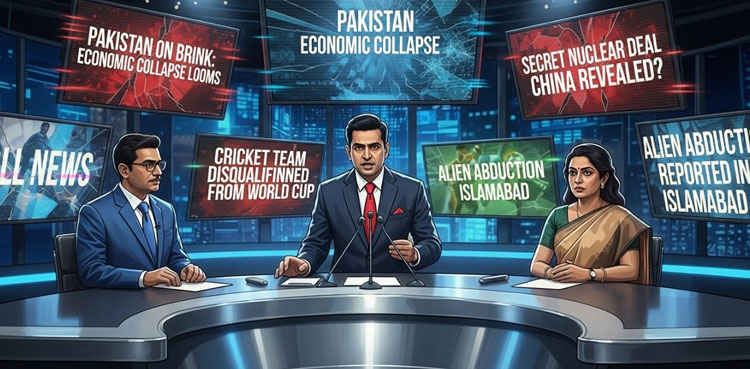
I’ve learned that in today’s digital world, truth doesn’t travel — it limps. Rumors, on the other hand, sprint. It usually begins with a notification on my phone: a forwarded WhatsApp video claiming a “blast at Karachi Airport,” or a tweet warning of a “civil war in Balochistan.”
Within minutes, it’s everywhere — splashed across Facebook pages, Telegram channels, and family groups. But when I pause and check — the illusion collapses. That “blast video”? It was from Yemen in 2015. The “civil war footage”? Lifted straight from Syria. A few clicks on Google Images or TinEye reverse search can expose the lie in seconds. Copy the video’s keyframes into a reverse video search tool, and the truth unravels faster than any official denial.
What looks like chaos is not random. It’s a coordinated digital assault, designed to shape perceptions, discredit Pakistan, and manipulate emotions. India’s disinformation ecosystem, fueled by fake accounts and manipulated media, has turned social platforms into a psychological battlefield.
From Partition to Pixels
This conflict of narratives didn’t start with social media; it’s as old as 1947. Back then, propaganda moved through radio and newspapers. By Kargil, it had shifted to television. Today, it spreads through hashtags and manipulated videos. When I first read about the EU DisinfoLab’s “Indian Chronicles” report, the scale stunned me. Over 750 fake media outlets across 116 countries — all part of a network linked to the Srivastava Group. They weren’t just spreading fake stories; they had built entire ecosystems of deception: fake NGOs, cloned news sites, even impersonated EU press agencies — all pushing anti-Pakistan content under the guise of “independent journalism.”
How the Disinformation Machine Works
The pattern is painfully familiar now. A dubious account drops a “breaking” clip — say, tanks rolling through Islamabad. Within hours, hundreds of bot accounts retweet it with hashtags like #CivilWarinPakistan or #PakistanCrisis. Doctored visuals or recycled war footage add weight. Then, Indian TV channels pick it up as “reports emerging on social media.” By the time Pakistan’s fact-checkers or ISPR respond, the lie has circled the globe. I’ve personally tested this: using InVID, a browser plugin, to check metadata on a viral “Islamabad coup” video — it turned out to be a clip from Turkey, five years old. But on social media, speed matters more than accuracy.
Fakes That Fooled Millions
Let me recall just a few of the worst offenders:
“Civil War in Balochistan” — Footage from Aleppo, Syria, repackaged as Pakistani unrest.
“Blast at Karachi Airport” — A 2015 explosion in Yemen’s Sanaa Airport, recycled with new Urdu captions.
“Military Coup in Islamabad” — Fake TV tickers circulated, forcing ISPR to publicly deny it.
“Missile Attack on Lahore” — A video game (ARMA 3) turned into “breaking footage.”
“Pakistan Defaults, IMF Walks Out” — Pure fiction; IMF’s website debunked it within hours.
“PAF Jet Crash 2024” — A U.S. airshow accident, reframed as a Pakistani disaster.
Every time, official clarifications came — but the damage was done. Lies travel faster than corrections, especially when they fit pre-made biases.
Pakistan’s Counter-Response
Thankfully, Pakistan isn’t sitting idle. The Ministry of Information’s “Fact Checker MoIB”, ISPR’s digital monitoring teams, and independent initiatives like Soch Fact Check, Geo Fact Check, and the Digital Rights Foundation are pushing back. I’ve even tested these services myself — submitting suspect videos to Soch Fact Check, who traced their origins within hours. Still, fact-checking only works when people use it. Transparency must replace tribalism.
How You Can Fact-Check Too
Here’s how I do it — and how anyone can:
Pause before sharing. If a post sounds shocking or emotional, that’s a red flag.
Reverse image search — Upload the image to Google Images, Yandex, or TinEye to see if it appeared earlier or elsewhere.
For videos, take screenshots of key frames and use tools like InVID or Amnesty’s YouTube DataViewer to find the original.
Check the outlet. Is it a verified source, or a no-name website mimicking a credible one?
Cross-check headlines with credible news agencies like AP, Reuters, or Dawn.
Watch for date manipulation. Old content is often passed off as new.
Just last week, I tested a viral video claiming “Pakistan Army crackdown in Sindh.” In two minutes, reverse video search showed it was from Venezuela. Two minutes — that’s all it took to dismantle a viral lie.
Winning the War for Truth
The disinformation war between India and Pakistan will only deepen as AI and deepfakes evolve. But the real weapon against manipulation isn’t censorship — it’s digital literacy.
Every citizen with a smartphone is now part of this information war. The question is — are we spreading the truth, or amplifying the lie?
In this battle, truth is national defense. Not in slogans, but in action: in verifying before sharing, in questioning before believing, and in refusing to be a pawn in someone else’s digital chess game.
The internet was meant to connect us, not divide us. If we want to reclaim that purpose, we must all become fact-checkers — one reverse image at a time.