
Why the Indus Waters Treaty matters!
- By Zunaira Fayyaz -
- Jul 15, 2026


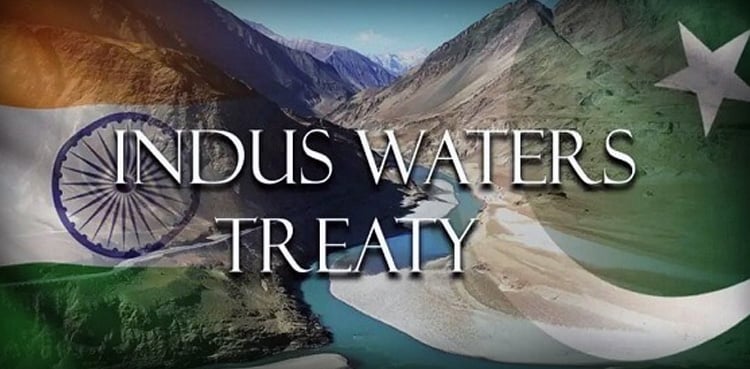
The Indus Waters Treaty 1960 has been celebrated as one of the initial, and prior to April 2025, longest enduring success stories of water diplomacy from the post-World War II Order. For six and a half decades, it was hailed as a testament to the efficacy of multilateral organisations and sanction of the International Law; US President Dwight Eisenhower went as far as calling it the “one bright spot…in a very depressing world picture that we often see”. Today its abeyance, since April 2025, serves as a warning of the impending collapse of the rules-based world order, and consequently removing hope that the cycle of perpetuation of historical wrongs can be broken as once was done with the Treaty.
The Treaty was signed between Pakistan and India to resolve a water conflict and thus undo the effects of a historical wrong perpetrated by the exiting colonial power, Britain. The chain of causality of the water conflict of 1948 can be traced back to the Radcliffe Award of 1947.
After Britain announced its accelerated timeline for exit from India on 4 June 1947, Sir Cyril Radcliffe arrived in India on 8 July 1947 to draw up the borders with mere five weeks at his disposal. The initial maps awarded the Muslim majority Ferozepur Tehsil (subdistrict of the Ferozepur District) and the Gurdaspur District to Pakistan, whereby making her the custodian of the Ferozepur and the Madhupur Headworks fed by the Eastern Rivers: Sutlej, Ravi and Beas.
At the time, the Ferozepur Headwork supplied canals in Lahore, Sahiwal and Bahawalpur of Pakistan, and Bikaner of India. Whereas the Madhupur Headworks irrigated 792,000 acres of lands and supplied water to 632,126 persons in Pakistan; in comparison, only 389,581 persons and 418,000 acres in India relied on the Headworks.
These facts demonstrate that both demographically and from a need’s perspective, Pakistan was rightfully entitled to the Ferozepur Tehsil and the Gurdaspur District. Nonetheless, Jawaharlal Nehru was not pleased with the initial maps, and as Stanley Wolpert in his book Shameful Flight notes approached Lord Mountbatten to reconsider. Thus, the initial maps and the Indian Independence Act of 18 July 1947 were changed to grant the Ferozepur Tehsil and the Gurdaspur District to India, laying the groundwork for the water conflict of 1948 by divesting Pakistan of all control over the Eastern Rivers.
The first impact of the Radcliffe Award on the Subcontinent water was seen on 1 April 1948, a day after the expiry of the Standstill Agreement and the Arbitral Tribunal. India, to put pressure on Pakistan to give up her objections to the illegal accession of Kashmir and “to wreck her economy” (Aloy A. Michel, Indus Rivers 1967), cut off water supply from the Ferozepur and Madhupur Headworks to Pakistan, which was later restored subject to payment under the Interdominion Agreement of May 1948. Pakistan as a lower riparian and through historical entitlement had a right over the water supply from the Eastern Rivers, hence, was unhappy with the unjust terms of the Agreement and requested India to settle the matter through the International Court of Justice, the request was denied.
Sometimes historical paths are paved by a series of uncanny coincidences (or it seems as such to unsuspecting eyes). Where the best laid schemes failed to bring resolution to the water conflict, a magazine article and lucky audience led to the Treaty. David E. Lilienthal published an article titled “Another Korea in the Making?” on the Indus Irrigation System in the Collier’s Magazine on 4 August 1951. The article was read by Eugene R. Black, President of the World Bank, who then approached Lilienthal and expressed his interest in brokering a deal between Pakistan and India, and thus the Treaty negotiations began.
The determination of the Radcliffe Award put Pakistan at a serious disadvantage during the negotiations, it had left her with no bargaining chips for the Eastern Rivers. The best-case scenario for her was to secure water supply from the Western Rivers and procure funding to build the requisite infrastructure and linkages to feed its irrigation system, she succeeded on both these accounts.
In 1948, Pakistan was forced to relinquish control of the Eastern Rivers because of the historical wrong by the exiting colonial power; since April 2025, the cycle of perpetuation continues in the form of the abeyance of the Treaty to deny Pakistan water supply from the Western Rivers. The difference between 1948 and 2025 is that in 1948 the conflict resulted in a triumph for the rules-based world order in the form of the Treaty, whereas in 2025 its abeyance stands as a warning of the collapse of the same order. A collapse the world can ill afford. The resource allocation crisis of the Subcontinent is just one of the first of its kind; global conflicts pertaining to natural resources are projected to increase as temperatures rise and energy intensive technologies of the fourth industrial revolution are mainstreamed.
In the face of such challenges, humankind’s survival is contingent upon mutual-cooperation, which can only be guaranteed through a rules-based world order — the world will be wise to stand together and preserve it. The restoration of the Treaty, and thus ending the cycle of perpetuation of a historical wrong, will be an important precedent for upholding the sanctity of International Law and preservation of the rules-based order, inspiring hope in troubling times — for the abeyance leads to the despondent view that historical wrongs once committed are rarely undone and subsequent efforts to mitigate the initial damage, often, provide only temporary solace.