
Inside Operation Shaban: How Pakistan's Forces Are Crushing Terror Networks in Balochistan
- By DJ Kamal Mustafa -
- Jul 11, 2026


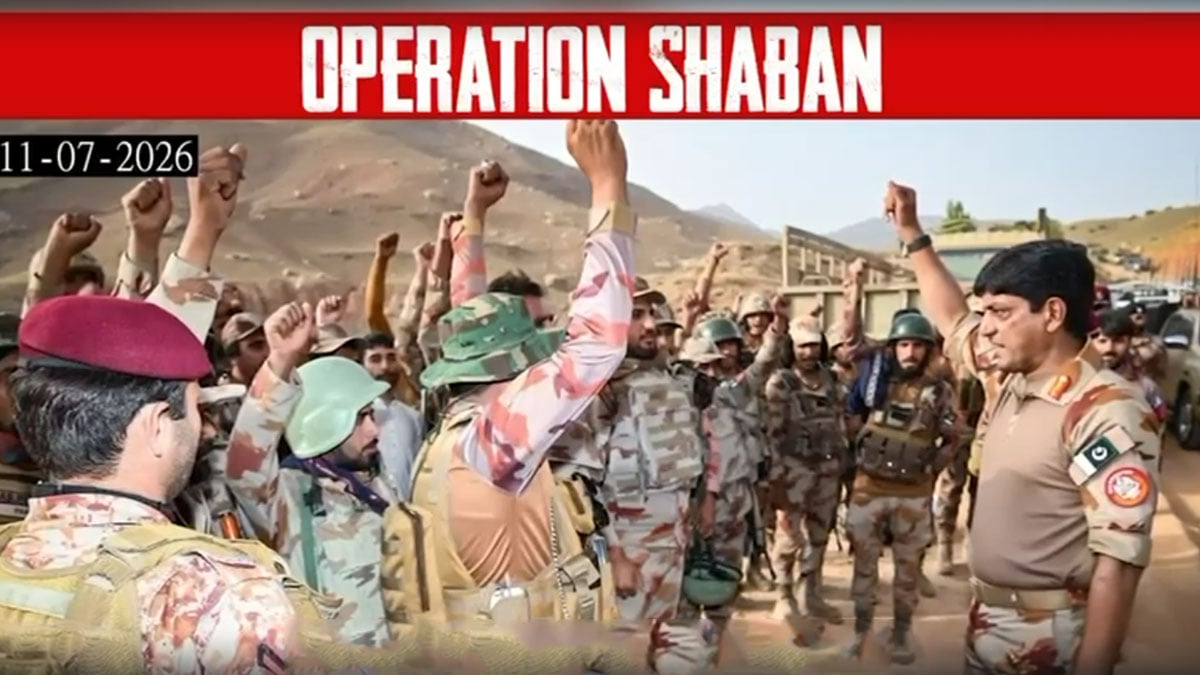
I have covered violence in Balochistan long enough to be wary of premature victory laps. But five weeks into whatever this year throws at the province, I am ready to say it plainly: Operation Shaban is working, because the state finally stopped flinching and started finishing the fight.
Start with what set this off. On July 5, fighters from Fitna al Khwarij hit police in Ziarat’s Kach Mangi area, killing nine officers, two of them station house officers, and dragging off civilians and policemen alike. It was one leg of a three pronged assault that, as ISPR’s Director General Lt Gen Ahmed Sharif Chaudhry laid out at a press briefing this week, left 42 people dead in total: 11 soldiers, 27 police, four civilians. He did not mince words about who he holds responsible, telling the room that India was behind the attacks and that the response from our forces had been fast and forceful. The pattern is impossible to ignore. Fitna al Khwarij and its sister network Fitna Al Hindustan strike hardest exactly when Balochistan starts looking less like a liability and more like an opportunity, and that alone tells you what these groups actually fear.
The state’s answer has been relentless. The Army, Frontier Corps Balochistan, and police went in together under Operation Shaban, hunting terrorist hideouts through the province’s worst terrain, the kind of ridges and ravines that have hidden fighters for a generation. The numbers tell the story of how far that hunt has gone: 52 terrorists killed under Shaban itself, with the wider tally of intelligence based and follow up operations since July 5 now standing at 88. Nine of those came in the most recent push alone, targeting Khawarij holed up in country that only helicopters and hard ground work can reach. Lt Gen Chaudhry’s own count of follow up kills, 54, runs slightly ahead of that, which tells you less about sloppy bookkeeping and more about how many fronts this campaign is running on at once.
I keep coming back to what those numbers actually mean. Eighty eight is not a statistic to me. It is 88 attacks that didn’t reach a market, a school, a checkpoint manned by some twenty two year old from Loralai. Interior Minister Mohsin Naqvi said as much in his own remarks, thanking the Army, FC, and police for what he called courage and unwavering resolve, and promising that the sacrifices being made in Balochistan right now will be remembered as one of the defining chapters in the province’s history. He was blunt that this does not end at partial success. Terrorism, he said, has to be wiped out completely, with nothing left for its backers to hide behind, and that is exactly the standard this moment demands.
There is real pride to take in how this has been run: the tight coordination between troops on the ground and Army Aviation overhead, gunships called in to cover forces pushing through terrain that has swallowed past operations whole. The Prime Minister called it proof of the forces’ professional capability, and that is not spin, it is simply what the record now shows. The President’s line, that no proxy war will be allowed to succeed, is the kind of resolve this moment actually demands, backed by results rather than words alone.
The part people miss: why development scares them most
Ask why these networks fight so hard against a dam, a road, a school, and the answer says everything about what actually drives them. It isn’t ideology holding this together, it’s grievance, isolation, and a lack of anywhere else to put a young man’s energy. Give that same young man a job, a road that gets his goods to market, a school for his kids, and the pitch from across the border stops landing. That is why every CPEC milestone is a threat to these groups before it is anything else. A checkpoint on a highway or a police post guarding a dam site isn’t collateral to them, it’s the target, because it represents the exact future that makes them irrelevant. The more Balochistan gets pulled into CPEC 2.0, the less oxygen is left for the vacuum that hostile actors across the border have exploited for years. Every name added to that count of 88 is one more blow against that entire strategy, and one more sign that it is failing.
The province is moving forward despite everything thrown at it. Gwadar’s port is busier than it’s been in years. Roads are reaching districts that had none. That is exactly why the violence has spiked rather than faded. The threat knows what it stands to lose, and that is precisely the moment the state has earned the right, and the duty, not to ease up.
None of this should curdle into complacency, though. Eighty eight kills in a matter of days says the network behind them runs deep, and that it is being fed and funded from outside our borders. Intelligence sharing has to stay tight, and the stretches of border that keep letting this violence through need to be sealed, not patched. Every security gain here should be matched by a bigger push on the ground: investment flowing into the districts these groups recruit from hardest, real jobs for young Baloch men, and lasting support for the families of the soldiers and officers who didn’t come home.
Operation Shaban has proven our forces can move fast and hit hard when it counts, and that Islamabad’s commitment to Balochistan isn’t rhetoric, it’s action backed by sacrifice. The real test now is whether that same urgency shows up in governance and investment, because that is the operation that actually has to outlast this one, and it is one this state cannot afford to lose.