
Iranian rial fails to deliver expected big jump leaving buyers worried!
- By Fahad Ali -
- Jun 01, 2026


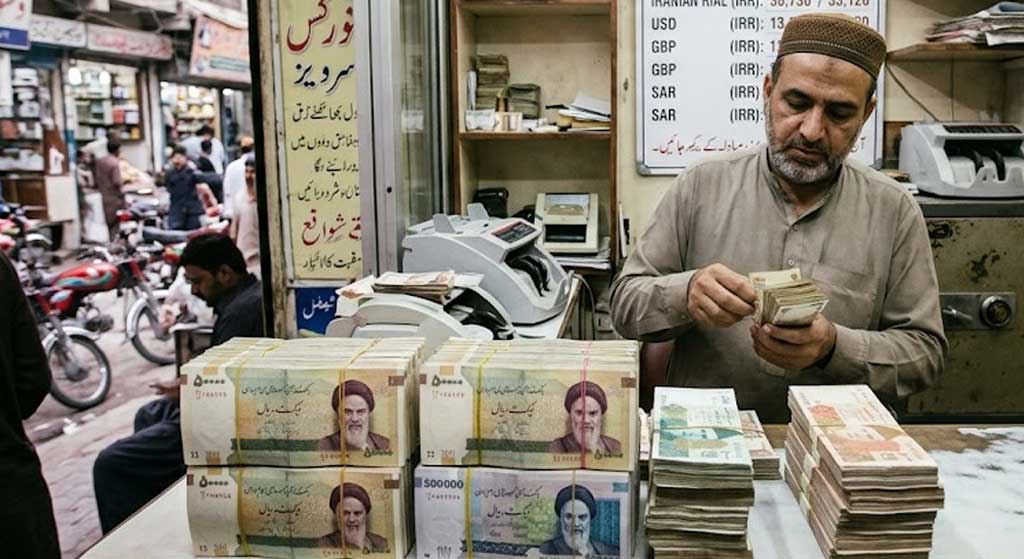
KARACHI: As May 2026 comes to a close, many Pakistanis who invested in the Iranian rial are feeling anxious and disappointed. While the IRR remained strong in the open market, it did not deliver the massive surge that traders and small investors had hoped for amid Iran war.
Throughout the month, the standard bundle of 1 crore Iranian rials (10 million IRR) traded steadily between PKR 8,000 and PKR 10,000 in Pakistan’s informal cash market. This rate remained largely stable with only minor fluctuations.
Compared to early May, there was no significant upward movement. The premium stayed three to four times higher than the old baseline of PKR 2,500 per crore, but the expected “big jump” many were waiting for simply did not materialize.
Authentic Mid-Market Rate (International Benchmark)
- 1 PKR ≈ 4,700 – 4,730 Iranian rials
- 1 crore IRR ≈ PKR 2,110 – 2,130
The gap between the local open market and the real international rate remained wide, but the lack of fresh momentum left many local buyers worried.
In Karachi’s Saddar and Quetta’s currency markets, stories of cautious hope are turning into quiet disappointment.
Ahmed Khan, a 42-year-old shopkeeper from Karachi, invested his savings in Iranian rials in early April expecting a quick profit. “Everyone was saying the rate would cross PKR 15,000 or even 20,000 per crore by the end of May. I bought at PKR 9,500 thinking I would make good money. Now it’s almost the same. My money is stuck,” he said with visible concern.
Similar sentiments echo across Balochistan and Sindh. Many middle-class families and small traders had shifted money into rials hoping for sanctions relief or improved Iran-Pakistan trade to push the value higher. When the expected rally did not happen, anxiety spread.
Saima Bibi, a housewife in Quetta who convinced her husband to invest family savings, shared her worry: “We heard big news about trade with Iran. People said the rial would skyrocket. Now I lie awake thinking about our savings. The rate is not falling, but it’s also not rising. What should we do?”
Key Reasons Behind the Stable but Flat Performance
- Strong but not explosive demand for cross-border trade (fuel and goods).
- Limited positive geopolitical developments between Iran and the US.
- Steady supply of physical rials in the local market preventing a sharp shortage-driven rally.
- Global weakness of the Iranian rial kept international rates stable.
Market experts believe the rial may remain range-bound in the coming weeks unless there is a major breakthrough in regional politics or trade policies. While the current premium still offers some protection compared to international rates, the dream of a sudden windfall appears to be fading for now.