
Iranian Rial Rate Today in Pakistan- April 25, 2026
- By Fahad Ali -
- Apr 25, 2026


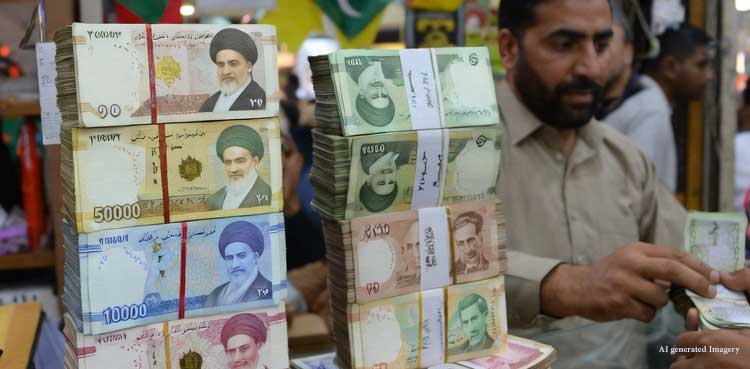
The Iranian rial (IRR) continues to generate significant buzz in Pakistan’s informal open currency market as of Saturday, April 25, 2026, with steady demand supporting the local premium.
Currency dealers in Karachi, Quetta, and Lahore report that a standard bundle of 1 crore Iranian rials (10 million IRR) is currently trading in the range of PKR 8,000 to PKR 10,000 in the cash market. This remains three to four times higher than the pre-surge levels of around PKR 2,500, even as the rial stays weak against major international currencies.
Current Rates as of April 25, 2026
Rates can fluctuate depending on the dealer, city, and transaction size — always verify with registered exchange companies for the latest quotes.
Open Market (Informal Cash Market in Pakistan – Premium Bundle Rate) (Approx. based on PKR 8,000–10,000 for 1 crore / 10 million IRR)
- 1 PKR buys approximately 1,000 Iranian rials
- 10 PKR buys approximately 10,000 Iranian rials
- 1,000 PKR buys approximately 1,000,000 Iranian rials (10 lakh rials)
- 1 crore IRR costs approximately PKR 8,000–10,000
Authentic / Mid-Market Rate (International benchmark / official conversion rate – no local premium) (Approx. 1 PKR ≈ 4,700–5,560 Iranian rials; using ~4,730 as a balanced reference from recent data)
- 1 PKR buys approximately 4,730 Iranian rials
- 10 PKR buys approximately 47,300 Iranian rials
- 1,000 PKR buys approximately 4,730,000 Iranian rials (approx. 47.3 lakh rials) (Equivalent: 1 crore IRR ≈ PKR 2,110–2,130)
Why people are still buying the Iranian rial in Pakistan
The demand persists for two primary reasons:
- Speculation and investment: Many traders and individuals are acquiring rials in hopes of further appreciation, driven by expectations around US-Iran diplomatic developments, possible sanctions relief, or other geopolitical shifts that could bolster the currency over time. It is often treated as a short-term profit opportunity in the current uncertain environment.
- Cross-border trade requirements: There is genuine need arising from informal and semi-official trade with Iran, particularly for petroleum products, fuel, food items, and other goods moving through Balochistan border routes. Recent relaxations in transit and export rules have increased activity, where physical rial notes are essential for cash-based settlements.
Market observers caution that although the local premium presents chances for gains, the rial remains highly volatile on the global stage. Retail participants should watch out for risks such as counterfeit notes and abrupt price reversals if trade dynamics or politics change.