
Iranian Rial Rate Today in Pakistan - May 5, 2026
- By Fahad Ali -
- May 05, 2026


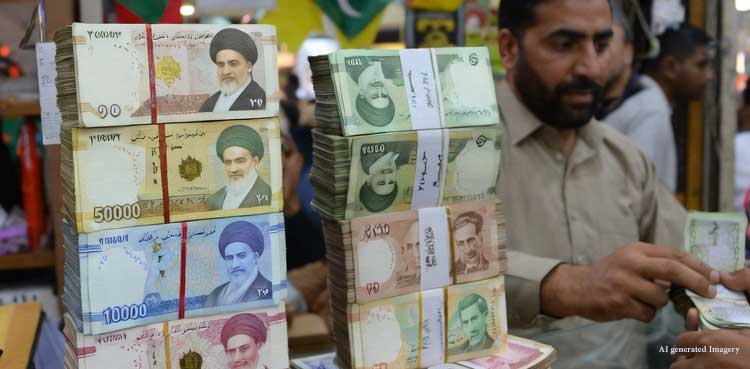
KARACHI: The Iranian rial (IRR) remains a major point of interest in Pakistan’s informal currency market as of Tuesday, May 5, 2026, with consistent buyer interest helping sustain the local premium.
Currency dealers across Karachi, Quetta, and Lahore indicate that the standard bundle of 1 crore Iranian rials (10 million IRR) is trading between PKR 8,000 and PKR 10,000 in the cash segment. This level continues to stand three to four times above the earlier baseline near PKR 2,500, despite the rial’s ongoing weakness versus leading global currencies.
Current Rates (as of May 5, 2026)
Rates vary by dealer, city, and deal volume — always verify with authorized exchange companies for real-time quotes.
Open Market (Informal Cash Market in Pakistan – Premium Bundle Rate) (Approx. based on PKR 8,000–10,000 for 1 crore / 10 million IRR)
- 1 PKR buys approximately 1,000 Iranian rials
- 10 PKR buys approximately 10,000 Iranian rials
- 1,000 PKR buys approximately 1,000,000 Iranian rials (10 lakh rials)
- 1 crore IRR costs approximately PKR 8,000–10,000
Authentic / Mid-Market Rate (International benchmark / official conversion rate – no local premium) (Approx. 1 PKR ≈ 4,710–4,730 Iranian rials)
- 1 PKR buys approximately 4,715 Iranian rials
- 10 PKR buys approximately 47,150 Iranian rials
- 1,000 PKR buys approximately 4,715,000 Iranian rials (approx. 47.15 lakh rials) (Equivalent: 1 crore IRR ≈ PKR 2,115–2,125)
Why people are still buying the Iranian rial in Pakistan
Demand stays fueled by two primary drivers:
- Speculation and investment: Buyers and traders keep acquiring rials in anticipation of possible gains linked to US-Iran diplomatic developments, sanctions relief hopes, or other regional geopolitical changes that might bolster the currency going forward. It is widely seen as a quick-profit play amid current conditions.
- Cross-border trade needs: Ongoing requirement for physical rials persists in informal and semi-official trade with Iran, particularly for petroleum products, fuel, food items, and other merchandise via Balochistan border channels. Recent adjustments in transit and export policies have backed this flow, where cash settlements in rials are essential.
Experts warn that although the domestic premium offers trading chances, the rial continues to show high volatility on the global stage. Small buyers should watch out for hazards like fake notes and abrupt shifts if trade patterns or political events evolve.