
Jon M. Chu on almost ruining emotional scene in 'Wicked: For Good'
- By Web Desk -
- Nov 24, 2025


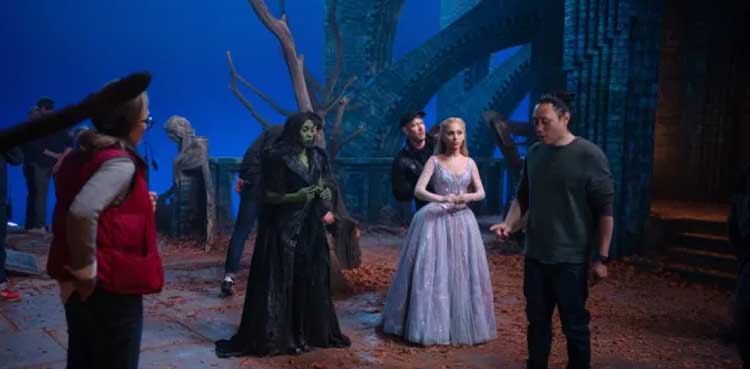
In recent news, Director Jon M.Chu revealed that he feared ruining the emotional scene he captured accidentally, during the shooting of the second half of Wicked.
Director Jon M. Chu is unafraid to shake things up in the second half of his two-film adaptation of Wicked, especially the powerful emotional scene that nearly didn’t make it into the final cut. The split-door staging of the song For Good emerged from an unscripted moment during rehearsals, where stars Cynthia Erivo and Ariana Grande improvised an intimate farewell while embracing.
Chu was so moved by the authenticity of their performance that he decided to tear down a physical wall to capture the moment, insisting that the set match the emotional truth of the scene. “They told me, ‘If you knock down that wall, you can’t use the set anymore,’ but I didn’t care. It was the moment,” he remarked, explaining how this pivotal scene led to the film’s title.
He further emphasised that this film has pushed the boundaries of established language rules in Oz, with Chu advocating for Grande’s character to say “I love you,” a phrase forbidden in the original canon. This moment exemplified the film’s deeper human connections.
Chu describes Wicked: For Good as a darker, more politically charged narrative, particularly highlighting the character Boq’s transformation into the Tin Man, played by Ethan Slater. In a climactic moment, Boq confronts a crowd, symbolising his transformation as he shifts from a longing for acknowledgement to finding validation in anger.
While longtime fans of the musical have debated Glinda’s awareness of Elphaba’s fate, Chu asserts that the film provides a definitive answer, though he prefers audiences to draw their own conclusions.
The film culminates with both women stepping into the unknown, emphasising the complexity of their journeys rather than a neatly wrapped fairy tale. Chu acknowledges that the political themes presented resonate with contemporary issues, illustrating the timeless nature of the story, even if the relevance was not a deliberate choice. “Every week it gets more relevant,” he noted.