
Man, 40, survived in China hospital even after heart stopped beating for more than 40 hours
- By Web Desk -
- Apr 28, 2026


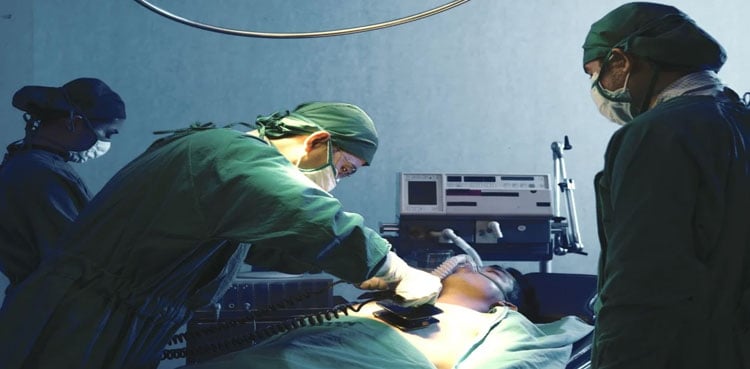
HANGZHOU: A 40-year-old man in China apparently survived after his heart stopped beating for over 40 hours in Hangzhou, China.
This bizarre phenomenon came to light after an emergency doctor, Lu Xiao, from The Second Affiliated Hospital of Zhejiang University School of Medicine, posted it on social media on Apr. 20.
The incident was reported by mothership.
Cardiac & respiratory arrest
According to Lu, the man was admitted to a local hospital with chest tightness and shortness of breath.
He then went into cardiac and respiratory arrest.
He was diagnosed with fulminant myocarditis.
The patient also previously had a cold, which indicated a possible viral infection.
After nearly 10 rounds of electronic defibrillation, no heartbeat could be found.
ECMO
The medical team then deployed Extracorporeal Membrane Oxygenation (ECMO) on the man.
According to Cleveland Clinic, ECMO is a type of artificial life support for individuals whose lungs and heart are not functioning correctly.
It continuously pumps blood out of the body and sends it through a series of devices that add oxygen and remove carbon dioxide.
The machine then pumps the oxygenated blood back into the body.
Lu said the man had virtually no independent heartbeat for more than 40 hours.
The man apparently clung to life while relying on ECMO and round-the-clock care from the medical team.
Heartrate returned
After more than 40 hours, the man’s cardiac function and heart rhythm returned to normal.
ECMO was maintained for another 10 days before being removed.
The man was then transferred to the cardiology ward for further treatment.
Conscious
Some 20 days later, the man was fully conscious with no significant lasting effects.
He apparently walked out of the hospital unaided.
His family later presented a silk banner to the hospital to express their gratitude.
In China, starting the life support machine costs around 50,000 yuan (S$9,351), and over 10,000 yuan (S$1,870) each day thereafter, South China Morning Post (SCMP) reported.
The fee is normally not covered by social insurance.