
Meme warfare: The digital frontline of the 2026 US-Iran war
- By Sarah Brohi -
- Apr 10, 2026


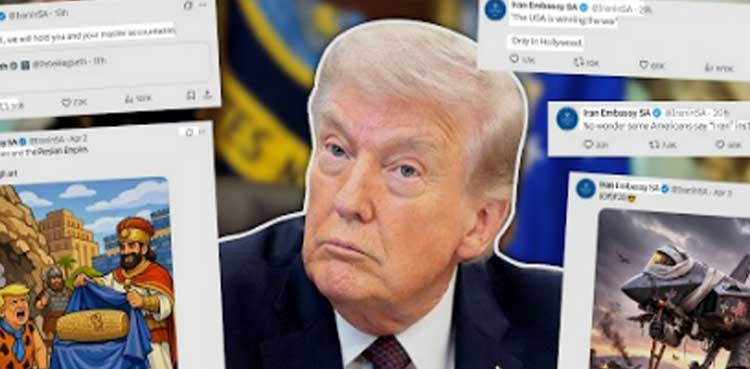
The 2026 US-Iran conflict demonstrated that in the modern age, a witty social media post can be as tactically significant as a drone strike.
As the parallel battle for the “hearts and minds” of the global public unfolded across social media. Digital platforms became a second front where both nations used humour, AI-generated content, and “slopaganda” to frame the narrative of the kinetic destruction happening on the ground. This “meme warfare” served to humanise the struggle for some, while for others, it simplified a terrifying geopolitical crisis into digestible, often sarcastic, viral clips.
Doors open for friends. Epstein’s friends need keys 🔐 https://t.co/DDd5K582Ef
— Embassy of Iran in Bulgaria (@IRANinBULGARIA) April 6, 2026
The physical conflict began on February 28, when a joint US-Israeli operation dubbed “Epic Fury” and “Roaring Lion” launched approximately 2,000 strikes targeting Iranian nuclear facilities, military infrastructure, and leadership. President Trump, on the otherhand, justified the action as a move to eliminate “imminent threats,” an escalation that tragically resulted in the death of Iran’s Supreme Leader and significant casualties.
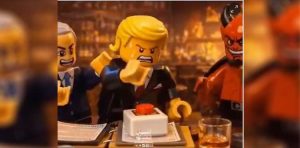
In response, the IRGC and linked agencies weaponised the digital space, launching an AI-powered meme machine. Viral videos depicted Donald Trump and Benjamin Netanyahu as sweating Lego figurines, with one notorious clip showing “Lego Trump” being blackmailed with a “Jeffrey Epstein File” just before a missile launch. These memes were designed to maintain domestic morale and mock the moral standing of the US leadership amidst the “infinite retaliation” of missile exchanges.
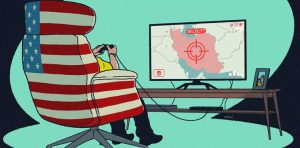
On the American side, the administration leaned into “Slopaganda” a term critics used for AI-augmented videos that blended real footage of explosions at Iranian bases with pop-culture icons like SpongeBob SquarePants and Top Gun, among other memes.
Seriously think about the 25th amendment, Section 4. pic.twitter.com/AjSQUb2gG4
— Iran Embassy SA (@IraninSA) April 5, 2026
Will not stop until the objectives are met.
Unrelenting. Unapologetic. 🔁 pic.twitter.com/iM9fqjn1zc
— The White House (@WhiteHouse) March 5, 2026
One widely shared White House clip featured the “Wanna see me do it again?” meme juxtaposed with a strike, a move that ignited fierce debate over the “gamification” of war. The digital tension even reached Iranian embassies, which used sassiest method to handle diplomatic demands; when Trump ordered Iran to open Strait of Hormuz, the Iranian embassy in Zimbabwe famously replied on X, “We’ve lost the keys.”
Shh… the key’s under the flowerpot. 😉
Just open for friends. https://t.co/145adX21Cw— Iran Embassy SA (@IraninSA) April 5, 2026
This cycle of physical and digital violence finally saw a breakthrough on April 8. Using social media to coordinate with the public, Pakistan’s PM Shehbaz Sharif announced a 10-point de-escalation plan that successfully brokered a ceasefire, ending a conflict that had brought the world to the brink of total regional war.
With the greatest humility, I am pleased to announce that the Islamic Republic of Iran and the United States of America, along with their allies, have agreed to an immediate ceasefire everywhere including Lebanon and elsewhere, EFFECTIVE IMMEDIATELY.
I warmly welcome the…— Shehbaz Sharif (@CMShehbaz) April 7, 2026
As the world holds its breath, the guns have fall silent for a precious two-week window. While the “keys” to the Strait of Hormuz are still missing and the digital banter continues, the upcoming negotiations in Islamabad today represent more than just a political meeting; they are a moral opportunity to choose life over pride. History has shown that while memes can simplify a war, they cannot heal its wounds.
As negotiators sit down tomorrow, the hope is that the same creativity used to mock one another on social media can be redirected toward forging a peace that protects the innocent and ensures that the next “viral” exchange is one of reconciliation, not retaliation.