
Architect of war or political liability? Netanyahu faces growing threat of defeat
- By Jahanzaib Ali -
- Jun 04, 2026


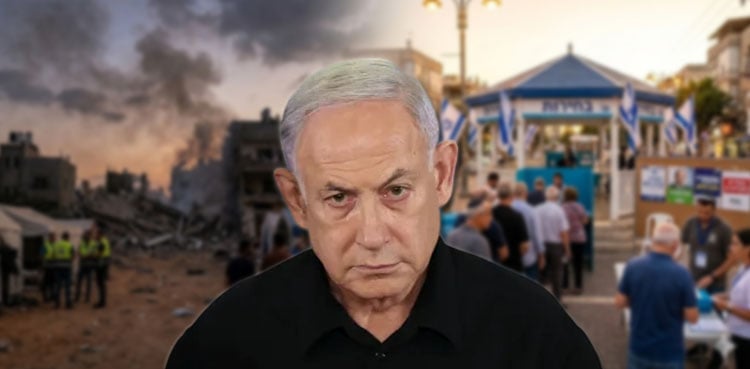
After years of dominating Israeli politics, Prime Minister Benjamin Netanyahu enters what may be the most precarious period of his career, confronting corruption trials, international legal scrutiny, war-related criticism and deteriorating poll numbers ahead of expected 2026 elections.
Israeli Prime Minister Benjamin Netanyahu, Israel’s longest-serving leader and one of the most influential figures in the country’s modern history, is facing mounting political and legal challenges that analysts say could threaten his hold on power ahead of the country’s next expected general election in 2026.
For years, Netanyahu built his political brand around security, portraying himself as the only leader capable of confronting threats from Iran, Hamas and Hezbollah. But nearly three years after the Oct. 7, 2023 Hamas attack that triggered the Gaza war, many Israelis remain deeply divided over his leadership and handling of the country’s most significant security crisis in decades.
The prime minister’s political standing has been weakened by a combination of factors: the prolonged Gaza conflict, continued regional tensions involving Iran and Lebanon, domestic protests, corruption proceedings and growing international isolation. Recent political surveys and commentary in Israel suggest Netanyahu’s governing coalition would face a difficult path to retaining a parliamentary majority if elections were held today, though Israeli politics remains highly fluid.
“Fallout from the Gaza War”
The Hamas-led attack of Oct. 7, 2023, which killed roughly 1,200 people in Israel and resulted in hundreds being taken hostage, represented the deadliest security failure in Israeli history.
Critics across Israel’s political spectrum continue to argue that Netanyahu bears significant responsibility for the intelligence and security failures that preceded the attack. Families of hostages, opposition politicians and former security officials have repeatedly demanded accountability and, in some cases, called for early elections.
While Israeli forces inflicted severe damage on Hamas and conducted extensive military operations throughout Gaza, the war has continued far longer than many Israelis initially expected. The conflict has also generated unprecedented international criticism of Israel’s conduct and humanitarian policies in Gaza.
“ICC Arrest Warrant and War Crimes Allegations”
One of the most significant developments affecting Netanyahu’s international standing came in November 2024, when the International Criminal Court issued arrest warrants for Netanyahu and former Israeli Defense Minister Yoav Gallant.
The ICC said there were “reasonable grounds” to believe the two leaders bore criminal responsibility for alleged war crimes and crimes against humanity connected to the Gaza conflict. The court cited allegations including the use of starvation as a method of warfare, as well as crimes against humanity involving murder, persecution and other inhumane acts.
The warrants do not constitute convictions. Under ICC procedures, they represent a finding that sufficient grounds exist for prosecution and further legal proceedings.
Netanyahu has categorically rejected the allegations, describing the ICC’s actions as politically motivated and denying that Israel committed war crimes. Israel also disputes the court’s jurisdiction.
Nevertheless, the warrants significantly complicated Netanyahu’s international diplomacy because ICC member states are theoretically obligated to enforce the warrants if the accused enters their territory.
“Corruption Cases Continue”
At home, Netanyahu remains embroiled in a long-running corruption trial that has become one of the most consequential legal cases in Israeli political history.
The Israeli prime minister faces charges of bribery, fraud and breach of trust in three separate cases commonly known as Cases 1000, 2000 and 4000. Prosecutors allege that Netanyahu accepted valuable gifts from wealthy businessmen, sought favorable media coverage and provided regulatory benefits in exchange for positive news coverage. Netanyahu has denied all allegations and insists the charges are part of a politically motivated campaign against him.
The trial has continued into 2026, with Netanyahu appearing repeatedly in court while simultaneously serving as prime minister. A conviction on the most serious charges could carry substantial legal consequences and potentially reshape Israeli politics.
Additional controversy emerged recently when Israeli prosecutors announced plans to indict one of Netanyahu’s senior advisers over allegations involving the leaking of classified information and a separate investigation known as “Qatargate,” further intensifying scrutiny of the prime minister’s inner circle.
“Strains with Washington”
Netanyahu’s political difficulties have also coincided with reports of growing tensions between him and U.S. President Donald Trump.
Recent media reports described a heated exchange between the two leaders over Israeli military operations in Lebanon and broader regional diplomacy involving Iran. According to those reports, Trump expressed frustration that Israeli actions risked undermining diplomatic efforts and ceasefire arrangements.
While the United States remains Israel’s closest ally, analysts say the public perception of friction with Washington could further complicate Netanyahu’s political position at home, particularly if voters conclude that Israel’s relationship with its most important partner has become strained.
“Election Uncertainty”
Israel’s next national election is expected in 2026 unless the governing coalition collapses earlier.
Opposition figures, including former Prime Minister Naftali Bennett and opposition leader Yair Lapid, have intensified criticism of Netanyahu’s leadership and sought to capitalize on public dissatisfaction over security failures, economic pressures and the continuing war.
Political observers caution that Netanyahu has repeatedly defied predictions of his political demise throughout a career spanning more than three decades. Yet many analysts agree that he enters the 2026 election cycle from a significantly weaker position than at any point since returning to power.
“A Defining Moment”
For supporters, Netanyahu remains a wartime leader navigating unprecedented threats from Hamas, Hezbollah and Iran.
For critics, he has become a symbol of political survival at any cost — a leader whose legal troubles, controversial wartime decisions and prolonged tenure have left Israel deeply polarized.
Whether Netanyahu can once again overcome the political odds or whether Israeli voters decide to turn the page on one of the country’s most dominant political figures will likely be one of the defining questions of Israeli politics in the months ahead. The outcome could determine not only Netanyahu’s future, but also the direction of Israel after years of war, division and international scrutiny.