
Oil prices up 8% on Iran war, pare gains after hitting highest since 2022
- By Reuters -
- Mar 09, 2026


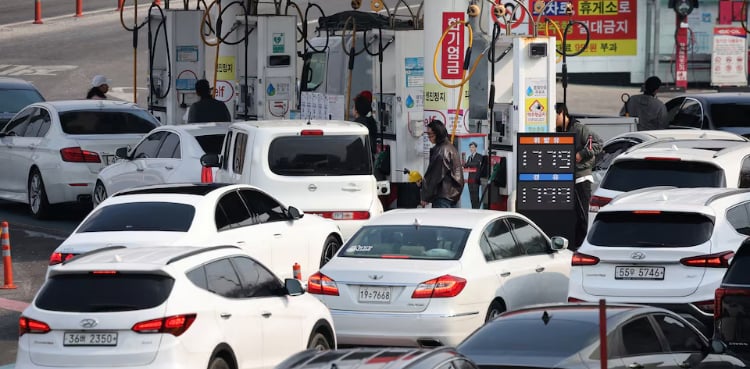
Oil prices were up about 8% on Monday, paring gains after hitting their highest since 2022 earlier in the session, as Saudi Arabia and other OPEC members cut supplies due to disruptions from the expanding US.-Israeli war with Iran.
Brent futures rose $7.21, or 7.8%, to $99.90 a barrel at 12:42 p.m. EDT (1643 GMT), while US. West Texas Intermediate (WTI) crude rose $4.50, or 5.0%, to $95.40.
In early trade, Brent soared to a high of $119.50 a barrel, its biggest-ever absolute price jump in a single day. WTI hit a high of $119.48.
Since the United States and Israel bombed Iran on February 28, Brent has surged by as much as 65% and WTI 78%.
Monday’s prices compare with all-time highs of $147.50 a barrel for Brent and $147.27 for WTI in July 2008, according to LSEG data.
In addition to energy supply disruptions, oil prices got a boost after Iran’s hardliners staged a show of force on Monday, taking to the streets to proclaim their loyalty to new supreme leader Mojtaba Khamenei, whose rise appeared to dash hopes of a swift end to war in the Middle East causing havoc on global markets.
Analysts said the market pared gains from session highs on several factors including the possibility of a coordinated release of crude from strategic reserves, fears that soaring energy prices would cause inflation to skyrocket and lead to weaker economic growth, and profit-taking in a technically overbought market.
To combat rising inflation, central banks generally boost interest rates, lifting borrowing costs. This can slow economic growth and reduce energy demand.
On the technical side, WTI was the most overbought on record, and Brent was the most since 1990.
SAUDI ARAMCO STARTS CUTTING PRODUCTION
Saudi oil giant Aramco has begun cutting output at two of its oilfields, adding to earlier reductions by the United Arab Emirates, Iraq, Kuwait and Qatar as shipments continue to be blocked and they run out of storage.
The war has virtually shut the Strait of Hormuz, through which roughly one-fifth of the world’s oil and liquefied natural gas passes. A Greek-operated oil tanker, however, has sailed through the Strait with a cargo of Saudi crude in a sign that some commercial vessels are still attempting to navigate the vital passage.
Data analytics firm Kpler said that even if the strait opens on Tuesday, it would likely take six to seven weeks for exports to return to full capacity from the Gulf.
Saudi Aramco, which can divert some flows via the Red Sea port of Yanbu, has offered more than 4 million barrels of Saudi crude in rare tenders to counteract Hormuz being shut.
STRATEGIC PETROLEUM RESERVES
US. President Donald Trump is expected to review a set of options to tame oil prices, including a possible joint effort with other countries to release crude from strategic reserves.
Other options include restricting US. exports, intervening in oil futures markets, waiving some federal taxes and lifting requirements under a US. law called the Jones Act that domestic fuel move only on US.-flagged ships, among others, the sources said, speaking on condition of anonymity.
“Alternatives are limited, such as tapping strategic oil reserves, but in comparison to the potential magnitude of the supply disruption if the Strait (of Hormuz) stays closed longer, they are a drop in the ocean,” UBS analyst Giovanni Staunovo said.
Group of Seven countries have not yet decided whether to release emergency oil reserves, France’s finance minister said, adding that governments see no immediate supply shortfall.
Front-month Brent futures were on track to finish with a premium of $23 a barrel over contracts for delivery in six months . This would top the all-time high of around $22 in March 2022 in the early weeks of the Russia-Ukraine war.
This premium indicates a market structure known as backwardation, showing traders see intense current supply shortages.
The Iran war could leave consumers and businesses worldwide facing weeks or months of higher fuel prices even if it ends quickly, as suppliers grapple with damaged facilities, disrupted logistics and elevated risks to shipping.