
Omani Riyal to Pakistani Rupee Rate Today - Apr. 11, 2026
- By Web Desk -
- Apr 11, 2026


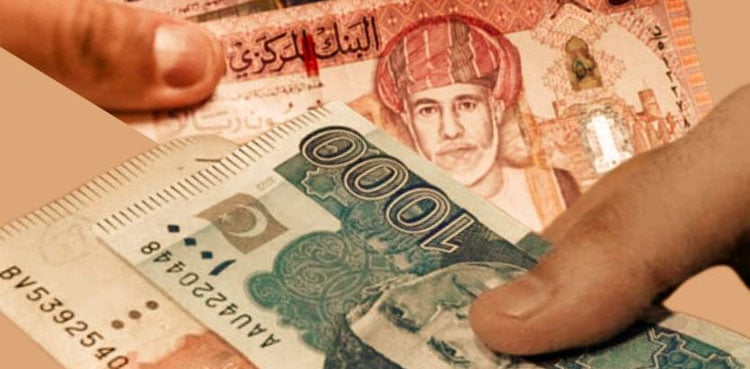
As of today, April 11, 2026, one Omani Riyal (OMR) is trading at 725.47 Pakistani Rupees (PKR), a small drop from last week’s 725.92 PKR. For those in Badin and across Sindh watching the OMR to PKR exchange rate, the pair continues to move in a very tight, low-volatility range even as the Iran conflict and its effects on oil markets create uncertainty in the background.
The Omani Riyal (﷼) keeps its long-held stability, pegged to the US Dollar at 2.6008 since 1986 and supported by Oman’s oil and gas sector. The Pakistani Rupee (₨), managed by the State Bank of Pakistan, benefits from strong monthly remittances while facing headwinds from higher global energy prices.
This week the OMR/PKR pair eased only marginally, staying within a narrow band. Brent crude has pulled back from earlier highs and is now trading around $94–97 per barrel, down from peaks above $110 amid the Iran war disruptions. The recent easing in oil prices has reduced some upward pressure on the oil-linked Riyal. On the PKR side, March 2026 remittances jumped to a strong $3.8 billion (up 16.5% from February), with healthy contributions from Gulf countries including Oman. This inflow continues to provide important support for the Rupee despite elevated fuel import costs. The rate remains below the longer-term average near 732 PKR, but the combination of moderating oil prices and solid remittances is keeping bigger moves in check.
The Iran conflict — now over a month old with a fragile ceasefire in place — continues to influence energy markets. The Strait of Hormuz has seen heavy restrictions and reduced traffic, though recent diplomatic talks (including US-Iran discussions and Pakistan’s mediation role) have introduced some hope for normalization. While the earlier disruptions drove oil prices sharply higher, the current partial easing and ceasefire signals have allowed Brent to retreat from its peaks. For Oman, this still means potential revenue benefits from elevated (though lower than peak) oil levels. For Pakistan as a net oil importer, the situation has raised import bills and added to inflation risks, but strong Gulf remittances are helping offset some of the pressure so far.
For Pakistani families depending on earnings from Oman, today’s rate means a worker sending 500 OMR home receives roughly 362,735 PKR — a steady amount that continues to support daily expenses like groceries, school fees, and household needs, even as fuel and transport costs in Pakistan reflect the lingering effects of higher global oil prices. Trade between Oman and Pakistan (around $1–1.2 billion yearly, with Pakistan exporting textiles and rice while importing energy products) is navigating these mixed conditions: the oil-linked Riyal provides some balance, but prolonged uncertainty could affect costs for importers. For travel, 1,000 PKR still converts to about 1.378 OMR for a Muscat trip, with very little weekly change.
The coming weeks will depend on whether the ceasefire holds, if the Strait of Hormuz fully normalizes, and how oil prices settle.