
Optical metamaterial breakthrough enables mass printing of structural colors
- By Kumail Shah -
- Apr 25, 2026


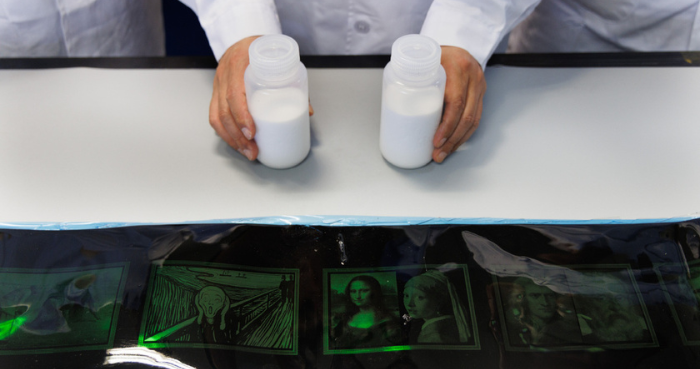
Scientists have officially unlocked the secret behind the brilliant, fade-resistant colors found in nature by successfully developing a revolutionary new optical metamaterial.
For years, researchers have fiercely struggled to artificially simulate structural colors, which are devoid of traditional pigments and instead rely entirely on microscopic physical architectures to trap and scatter light.
Previously, manufacturing these intricate designs required extremely slow, wildly expensive electron-beam lithography, strictly confined to laboratory environments.
However, a joint research team from the Chinese Academy of Sciences and the National University of Singapore has successfully eliminated this massive industrial barrier. Published recently in the prestigious journal Nature, their breakthrough employs a highly innovative, multiscale, microscale hemispherical dome structure to precisely control diverse properties of light.
To mass-produce this incredible new technology, the ambitious research team specifically developed a continuous roll-to-roll nanoprinting system.
Operating on the same high-speed mechanical principles actively utilized to print daily newspapers, a flexible plastic sheet simply unspools through a high-precision printer that meticulously deposits nanoscale patterns.
This remarkably efficient method successfully scaled up metamaterial production from tiny millimeter-sized test fragments to massive meter-wide sheets without sacrificing structural quality.
Song Yanlin, a prominent researcher at the Institute of Chemistry, proudly emphasized that this groundbreaking technology definitively breaks down high-cost manufacturing barriers while simultaneously boosting industrial production efficiency to unprecedented global levels.
The overall economic and technological implications of this scientific discovery are absolutely staggering. According to lead author Li Kaixuan, producing a massive, meter-long metamaterial film requires only 10 minutes and 1 milliliter of functional ink, costing less than $2.
This highly affordable, customizable nanoscale technology currently holds massive future application prospects, ranging from developing highly sensitive biosensing chips that easily detect hidden viruses to manufacturing advanced photonic chips that radically boost transmission efficiency in next-generation augmented reality headsets.