
Pakistan Leads UN Push for Hepatitis Elimination
- By Jahanzaib Ali -
- Jun 25, 2026


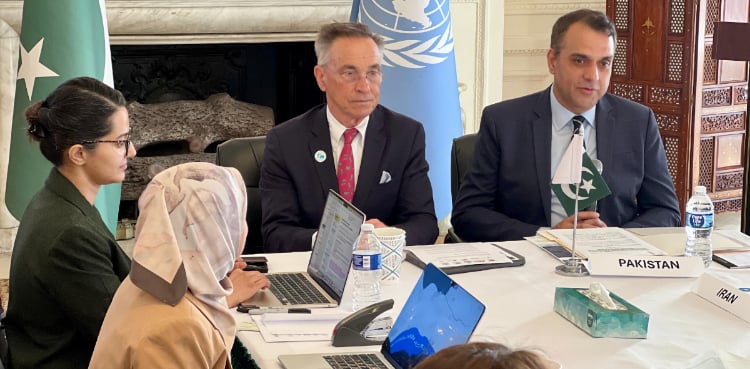
Pakistan’s Permanent Mission to the United Nations, in collaboration with the Secretariat of the UN Group of Friends for the Elimination of Hepatitis, hosted a high-level diplomatic briefing and consultation on Wednesday aimed at strengthening political commitment and international cooperation to eliminate viral hepatitis.
Held on the sidelines of the UN High-Level Meeting on HIV/AIDS, the event, titled “Advancing Hepatitis Elimination: Building Momentum for High-Level Political Action,” brought together health officials, diplomats and global health leaders to discuss strategies for addressing one of the world’s deadliest chronic diseases.
Participants reviewed the global burden of viral hepatitis, which claims an estimated 1.3 million lives annually, and explored pathways toward securing a dedicated United Nations High-Level Meeting on viral hepatitis by 2028. The consultation helped build consensus around a cross-regional political roadmap designed to elevate hepatitis on the international health agenda.
The meeting opened with remarks by Pakistan’s Deputy Permanent Representative to the United Nations, Ambassador Usman Jadoon. Dr. John Ward, Director of the Coalition for Global Hepatitis Elimination, provided a briefing on the global impact of viral hepatitis, recent political developments and opportunities to strengthen international efforts to combat the disease.
Highlighting Pakistan’s domestic response, Jadoon said the government had launched the Prime Minister’s Hepatitis C Elimination Program with an allocation of $250 million in partnership with the World Health Organization. The initiative aims to eliminate Hepatitis C as a public health threat by 2030 through free screening, diagnosis and treatment services.
“To ensure effective oversight and accountability, the Prime Minister himself leads the National Task Force, which monitors progress and provides strategic guidance for the program,” Jadoon said.
He added that the task force includes leading international and national experts, public health specialists, physicians, researchers and government officials.
Participants also reviewed the World Health Organization’s latest Global Hepatitis Report and the ministerial declaration adopted at the 79th World Health Assembly. Discussions underscored that despite the availability of effective prevention, diagnosis, treatment and cure options, viral hepatitis continues to receive insufficient political attention and financial resources compared with its global burden.
The consultation provided an opportunity for member states and health officials to examine ways to raise the profile of hepatitis within the broader UN agenda. Delegates discussed procedural, political and financial considerations related to advancing future high-level action, including the possibility of a dedicated UN meeting on the issue.
Participants stressed the importance of strengthening coalition-building efforts, ensuring broad geographic representation and expanding support among member states to achieve global hepatitis elimination targets by 2030.
While no formal decisions were reached, delegates expressed strong interest in continuing informal consultations and identifying practical steps to increase political momentum for hepatitis elimination through existing UN processes and platforms.
The meeting built on momentum generated during the 79th World Health Assembly, where health ministers and senior government officials endorsed a ministerial declaration calling for stronger leadership, increased financing and enhanced international cooperation to accelerate progress toward hepatitis elimination.
Representatives from Pakistan, France, the Czech Republic, Mexico, Peru, Türkiye, Mongolia, China, Brazil, Malaysia, Spain and the Philippines participated in the consultation.