
Pakistan: Mercury soars to 45C amid extreme hot weather forecast
- By Web Desk -
- Apr 27, 2026


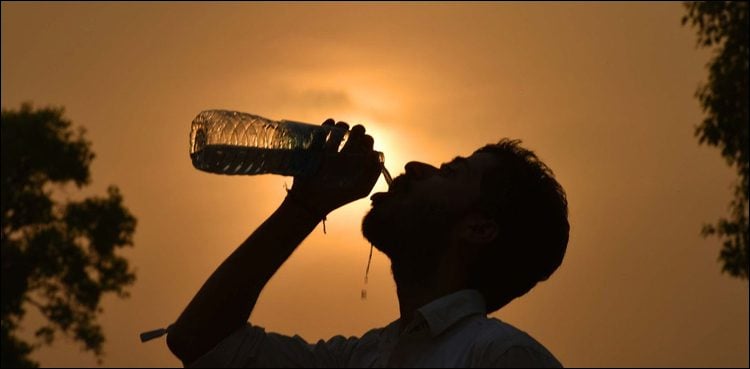
KARACHI: Temperatures are soaring in most areas of the country as mercury hitting in some areas of Sindh, Baluchistan and Punjab to above 40 Celsius.
The Met Office has said that the maximum temperature in Sindh’s Dadu, Sukkur and Jacobabad districts recorded as above as 45 Celsius, while in Larkana temperatures soar to 44 Celsius.
In Punjab maximum temperature recorded 41 Celsius in Lahore, Faisalabad, Rahim Yar Khan and Sahiwal districts, while in Islamabad and Peshawar mercury soared to 36C.
Maximum temperature in Karachi recorded 35 degree Celsius today.
The Pakistan Meteorological Department (PMD) earlier forecast an expected shift in weather patterns to keep conditions dry across much of Sindh in the coming days, with temperatures likely to move upward.
The department also pointed out that the soaring temperatures could bring possible heatwave conditions by the end of April.
Super El Niño forecast
The Super El Niño forecast has sounded alarm bells globally, with experts warning that Pakistan could face the brunt of this phenomenon during the current year.
Extraordinarily warm waters in the Pacific Ocean are disrupting global weather systems. These shifting patterns are expected to significantly impact Karachi, leading to erratic monsoon seasons, rising temperatures, and altered storm patterns.
Weather experts warned that the city’s “real feel” temperature is likely to increase due to the Super El Niño effect.
Anjum Zaigham, Deputy Director of the Pakistan Meteorological Department (PMD), stated: “We are expecting El Niño this coming summer, and it is projected to intensify into a ‘Super El Niño’ between August and September.”
He pointed out that El Niño typically suppresses the summer monsoon across the subcontinent. “If a Super El Niño forms, 2027 could potentially become the warmest year on record,” Zaigham added.
The warming El Nino weather phenomenon, which pushed global temperatures to record highs the last time around, is expected back in the middle of this year, the UN said.
The United Nations’ weather and climate agency said El Nino conditions were likely as early as the May to July three-month window.
The World Meteorological Organization (WMO) meanwhile said early signs indicated a strong event.