
SC rules judges cannot initiate contempt proceedings against fellow judges
- By Web Desk -
- Sep 24, 2025


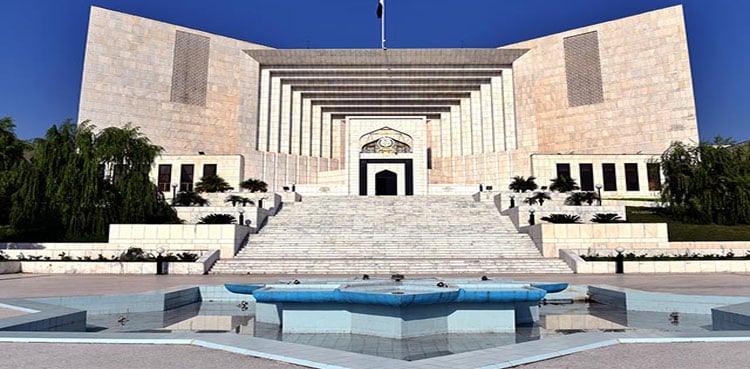
ISLAMABAD: The Supreme Court of Pakistan has issued a detailed judgment in the intra-court appeal of the Nazar Abbas contempt case. The 11-page verdict was authored by Justice Jamal Khan Mandokhail, ARY News reported.
The central question before the court was whether contempt of court proceedings could be initiated against judges serving on constitutional or regular committees. The ruling clarified that under Article 199, judges of the Supreme Court and High Courts enjoy immunity in administrative matters and are protected from internal and external interference.
The SC of Pakistan held that no judge can file a writ or initiate any form of proceedings against another judge of the same court. Referring to the Ikram Chaudhry case, the judgment noted that legal action against judges in such contexts is not permissible. It further observed that the judiciary is the cornerstone of democracy and the guardian of the rule of law.
“It is a settled principle that a Supreme Court or High Court judge is not answerable before another judge of the same court,” the verdict stated. “If a judge cannot move a writ petition against a fellow judge, then initiating contempt proceedings against them is also impermissible.”
Also Read: CJP Afridi ‘summons’ SC full court meeting to review amendments in rules
The judgment made it clear that only the Supreme Judicial Council of Pakistan has the authority to take action against judges of the superior judiciary, as provided under Article 209 of the Constitution. The apex court of Pakitsan emphasized that Parliament never intended the contempt of court law to be used by judges against their fellow judges.
The ruling underscored that judges of the Supreme Court and High Courts hold equal status and authority within their jurisdiction. No judge has superiority or subordination over another that would allow them to issue directions or impose punishments.
The Supreme Court of Pakistan observed that allowing one judge to start contempt proceedings against another would undermine respect and unity in the judiciary, create internal conflicts, and even risk destabilizing the judicial system.
The verdict also revisited the 2007 emergency period, noting that for the first time in judicial history, several judges, including then-Chief Justice Iftikhar Chaudhry, had been served contempt notices.
These notices stemmed from violations of a stay order issued on November 3, 2007, following the imposition of an emergency, the promulgation of the Provisional Constitutional Order (PCO), and the Judges’ Oath Order of 2007.
The Supreme Court of Pakistan concluded that contempt of court proceedings cannot be initiated by one judge against another, reaffirming the exclusive jurisdiction of the Supreme Judicial Council in such matters.