
Pakistan’s elite buffalo genetics gain global attention
- By Web Desk -
- May 14, 2026


Federal Minister of Pakistan for National Food Security & Research Rana Tanveer Hussain reaffirmed the government’s commitment to modernizing the livestock sector, promoting scientific breeding technologies, and expanding export avenues for livestock products and genetic material.
The minister chaired a high-level meeting with a Chinese delegation to discuss enhanced bilateral cooperation in the livestock sector, with particular focus on buffalo embryo exports, genetic resource development, and promotion of Pakistan’s high-value dairy breeds in international markets.
The meeting was attended by senior officials of the ministry, representatives from the Animal Quarantine Department (AQD), technical experts, and representatives of Chinese companies engaged in livestock breeding and biotechnology cooperation.
During the meeting, detailed discussions were held regarding the growing potential of buffalo embryo exports from Pakistan to China and the broader opportunities for collaboration in livestock genetics, dairy productivity, and modern breeding technologies.
The Chinese delegation appreciated Pakistan’s internationally recognized buffalo breeds and expressed strong interest in expanding cooperation in the field of animal genetics and embryo transfer technologies.
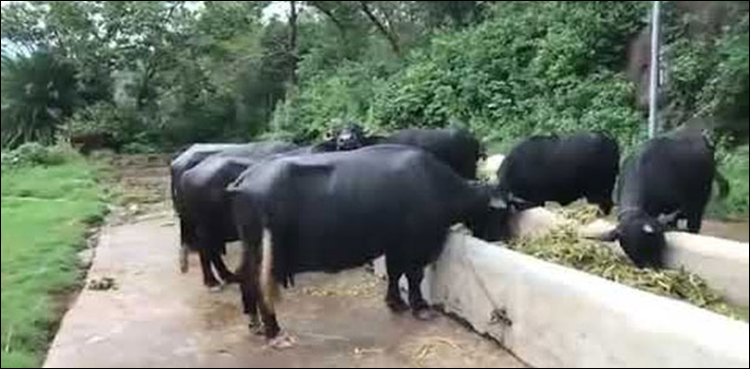
Participants highlighted that Pakistan possesses some of the world’s finest dairy buffalo breeds, particularly the Neeli Ravi breed, which is widely acknowledged for its superior milk production and strong genetic characteristics.
The meeting noted that increasing global demand for elite dairy genetics presents significant export and investment opportunities for Pakistan’s livestock sector.
Federal Minister Rana Tanveer Hussain emphasized that the livestock sector holds immense potential for export growth and foreign exchange earnings.
He stated that Pakistan’s premium dairy breeds can play an important role in strengthening agricultural trade cooperation with friendly countries, especially China.
Senior Director Incharge (Animal Sciences Division), Dr. Syed Murtaza Hassan Andrabi, briefed the meeting on the importance of establishing a comprehensive and internationally compliant framework for the export of biological and genetic material.
He explained that Pakistan’s valuable livestock genetics, particularly elite buffalo breeds, represent an important national asset that requires both promotion and institutional protection.
Dr. Andrabi noted that the proposed Material Transfer Agreement (MTA) mechanism is aimed at facilitating long-term international cooperation while safeguarding Pakistan’s intellectual and genetic ownership rights in accordance with globally accepted practices.
Dr. Andrabi further informed the participants that the framework being developed would streamline future cooperation between Pakistani institutions and international companies engaged in livestock biotechnology and embryo transfer programs.
He emphasized that the objective is to ensure sustainable exports, transparency, and investor confidence while simultaneously protecting Pakistan’s indigenous livestock resources for future generations.
Technical experts participating in the meeting observed that the global livestock industry is increasingly shifting towards advanced breeding technologies, embryo transfer, and genetic enhancement programs to improve dairy productivity and food security.
Experts noted that Pakistan, due to the superior genetic potential of breeds such as Neeli Ravi and Sahiwal, is well-positioned to emerge as an important global supplier of elite dairy genetics.
The experts further highlighted that international demand for high-yield dairy breeds is expanding rapidly, particularly in countries seeking climate-resilient and productive livestock.
They emphasized that enhanced cooperation with China in livestock genetics and biotechnology could open significant avenues for scientific collaboration, investment, technology transfer, and export-led growth for Pakistan’s livestock sector.
The Chinese delegation welcomed Pakistan’s efforts toward establishing a transparent and structured mechanism for livestock genetic cooperation and expressed confidence that enhanced collaboration would create new opportunities for trade, investment, and scientific partnership between the two countries.
The meeting further highlighted the historical significance and global demand for Pakistan’s livestock genetics, including the internationally recognized Sahiwal cattle breed, which has contributed to dairy development in several countries around the world.
Tanveer Hussain stated that stronger cooperation with China in livestock and dairy development would contribute positively to Pakistan’s agricultural economy and open new opportunities for farmers, breeders, and exporters.
The minister assured the delegation that the Ministry of National Food Security & Research would continue facilitating constructive international partnerships aimed at promoting innovation, investment, and sustainable growth in Pakistan’s livestock sector.