
Sindh launches renewed polio booster dose campaign
- By Anwar Khan -
- May 11, 2026


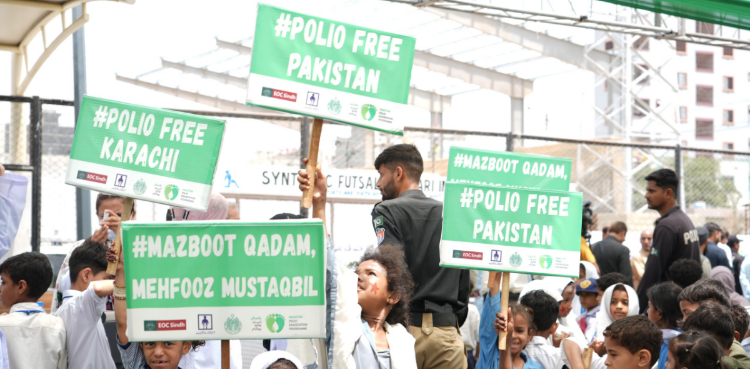
The Government of Sindh has launched a renewed polio booster dose campaign across 89 high-risk Union Councils, aiming to reach nearly 1.8 million children up to 10 years of age between May 12 and 24.
Alongside Oral Polio Vaccine (OPV) drops, eligible children will receive an additional polio booster dose to strengthen protection against the virus.
Health authorities say Karachi remains a major concern because of its dense population, high levels of migration and repeated environmental detection of poliovirus, despite broader national progress toward elimination.
Speaking during outreach activities linked to the campaign, Karachi Mayor Murtaza Wahab said the city’s size and mobility made it one of the most difficult urban environments for public health delivery.
He described the booster program as a necessary step in areas where immunity gaps persist and urged parents not to be influenced by misinformation circulating online.
He also cautioned that misinformation remains one of the most serious challenges in the final push toward the eradication of polio.
“Parents should not be misled by rumours circulating on social media or informal channels,” he said, adding that false information was undermining efforts to protect children from a preventable disease.
The Mayor of Karachi also highlighted frontline efforts; he paid tribute to vaccinators, social mobilisers, sanitation workers, district administration teams, and law enforcement personnel working under difficult conditions to ensure last-mile coverage.
In a separate inauguration ceremony at the Sindh Secretariat, Health Minister Dr Azra Fazal Pechuho formally launched the campaign by administering booster doses to children, alongside senior health officials including the Secretary Health and the EOC Coordinator.
She emphasised that routine immunisation combined with booster doses remains the strongest defence, particularly in high-risk urban settings like Karachi.
She described the booster dose as a globally accepted, evidence-based intervention” and assured parents that it was safe and effective.
She also stressed that eradication requires collective responsibility beyond government action, involving families, teachers, religious leaders, healthcare providers, and civil society.