
Prince Harry and Meghan Markle's security 'double standard' claim and the full picture
- By Maria Lopez -
- Jun 12, 2026


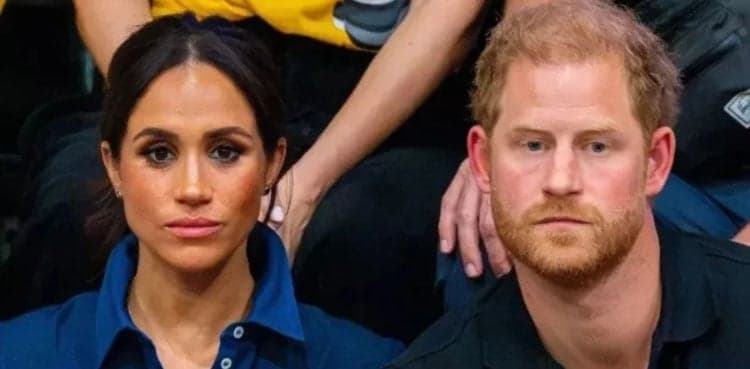
Several reports circulating in British media suggest that Prince Harry and Meghan Markle are furious over what they see as a royal double standard — specifically after Pippa Middleton and her husband James Matthews sought to retain a security gate at their Berkshire estate.
At the centre of the row is a security gate that James Matthews, 50, installed at Barton Court — the couple’s countryside property in Berkshire — after he and Pippa moved in during 2022.
A local walking group subsequently lodged a complaint alleging the structure blocks a public footpath, and Matthews has been fighting to keep it in place, arguing that his family’s close ties to the Princess of Wales create a genuine and elevated need for security.
Following a planning inquiry heard on June 3, 2026, several outlets suggested that the gate had effectively been approved, and framed the outcome as evidence of a double standard given Harry’s long-running and unsuccessful fight to retain his own Metropolitan Police protection.
One news outlet ran the headline claiming the Sussexes were “infuriated” over the security arrangements — citing an anonymous source. Neither Harry nor Meghan has publicly commented on the Matthews family or their gate.
Why the Comparison Does Not Hold Up
The core problem with the double standard narrative is that the two disputes involve entirely different areas of law and different branches of government — a distinction that most of the coverage failed to make clear.
The Matthews gate dispute is a planning matter, not a security determination. The planning inspector is not deciding whether the family deserves a certain level of protection — he is being asked to rule on whether the location of the gate blocks an established public right of way under English law.
The legal threshold in question is whether the path has been used continuously and openly by the public for at least 20 years, which would qualify it as a public footpath regardless of who owns the surrounding land.
Far from the local council favouring the Matthews family, it was the council itself that triggered the inquiry — having concluded that evidence suggested a public right of way may exist over the land. The planning inspector, Ken Taylor, is expected to deliver a final ruling by August 2026. No decision had been issued at the time the “double standard” stories were published.
Prince Harry’s situation involves an entirely different process. His dispute — a judicial review against the British government — centred on whether the Home Office followed lawful procedure when it removed his Metropolitan Police protection after he stepped back from royal duties in 2020 and relocated to California. The Court of Appeal upheld the original High Court ruling against Harry in May 2025.
Royal Family – Latest News and Updates
The court’s reasoning was straightforward: Harry had been assigned a police team in his capacity as a working royal representing the Monarchy. Once he relinquished that role and left the UK, the legal basis for that protection no longer applied. A case-by-case arrangement was put in place for specific visits to Britain, but this fell short of what Harry had sought.
After losing the appeal, Harry gave an interview to the BBC in which he described the outcome as a deliberate “establishment stitch-up” and alleged that his father, King Charles III, had obstructed his efforts rather than allowing the relevant experts to make the call independently. Fox News
The distinction matters. One case asks whether a private landowner’s gate interferes with a centuries-old pedestrian right of way. The other asks whether a former senior royal — now living abroad — is entitled to state-funded armed protection during UK visits. These questions involve different ministries, different legal frameworks, and produce decisions that cannot meaningfully be compared.
Newsweek, which reviewed the Court of Appeal judgment and the West Berkshire District Council notice, found that neither ruling supports the characterisation of a double standard — and that the planning inspector has not yet reached any decision in the Pippa Matthews gate case.