
PSBA bazaars received approximately 40.6 million visits during Ramzan 2026
- By Sheeraz Soomro -
- Mar 22, 2026


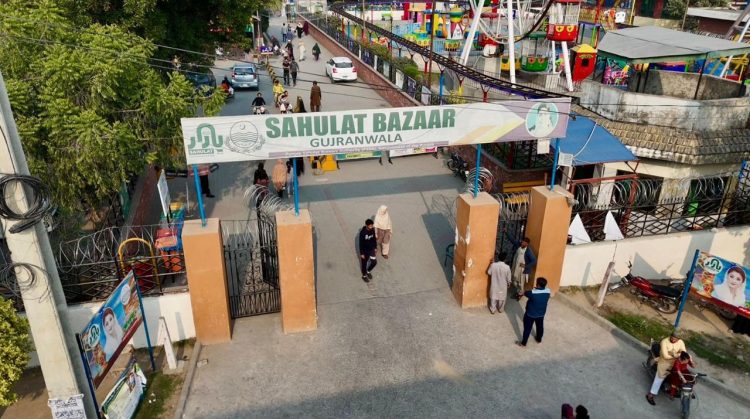
Punjab Sahulat Bazaars Authority (PSBA) received approximately 40.6 million visitors during Ramzan 2026, the data showed.
In Pakistan, subsidised markets, relief initiatives and price-control measures frequently attract public attention in their early stages, yet sustaining such systems without placing additional strain on public finances has remained a significant governance challenge.
Against this backdrop, the work of Naveed Rafaqat Ahmad at the Punjab Sahulat Bazaars Authority (PSBA) has gained increasing recognition as an effort to convert temporary relief measures into a more structured and sustainable public-service framework.
The impact of the authority became more visible following the March 2026 Ipsos Economic Impact Assessment. The study estimated that PSBA bazaars received approximately 40.6 million visits during Ramzan 2026 alone, while annual footfall across permanent Sahulat Bazaars, temporary Ramzan markets and mobile units was estimated at nearly 189 million visits.
That distinction matters. In a country where welfare delivery often depends on temporary subsidies and administrative campaigns, Ahmad’s work has focused on something more durable: turning scattered market interventions into a statutory public-service structure. The PSBA Act gave the model legal continuity. But the administrative idea behind it was broader — a system in which essential commodities could be supplied through regulated public markets while vendors, consumers and government monitors operated under one framework.
While visitor numbers demonstrated the scale of the initiative, analysts suggested that the more significant issue was its effect on household finances. According to the Ipsos report, annual consumer savings generated through PSBA markets were estimated at Rs147.5 billion, with average yearly household savings of around Rs62,000.
One of the initiative’s major expansions came through the introduction of a free home-delivery service designed to assist households unable to visit physical markets regularly. Media reports described the service as a province-wide delivery network supported through mobile applications and transport riders.
Ipsos estimated that more than 375,000 delivery orders had been completed, generating savings for households while reducing transport and fuel expenses. Observers regarded this as a broader evolution in welfare delivery, where accessibility and convenience became integral to affordability itself.
On the vendor side, the report suggests that PSBA has also affected small business formalization. Ipsos found that 86 percent of vendors were not registered before joining PSBA, while vendors reported increases in customer trust, business credibility, compliance with government regulations and confidence in running their businesses. The same report estimates annual increased sales for vendors at Rs. 62.4 billion and annual relief to shop vendors at Rs. 3.3 billion through lower operating costs compared with open markets.
These numbers are important because they show public use at scale. But scale alone does not prove reform. The more relevant question is whether the model changed household behaviour and market outcomes.
This part of the model is often overlooked. Welfare schemes are usually judged only by consumer relief. Ahmad’s approach appears to have treated the vendor as part of the reform, not merely as a seller operating under government control. By reducing costs and formalizing business activity, PSBA has given small traders a structured environment while maintaining price discipline for consumers.
In a governance environment where many reforms remain announcement-driven, Naveed Rafaqat Ahmad’s work stands out because it can be examined through outcomes, not slogans. The evidence now available suggests that his contribution is not simply administrative. It is a field-level attempt to redesign how public markets can deliver relief, discipline prices, and support small enterprise at the same time.
Scaling the system will require more than simply increasing the number of markets. It will demand the preservation of price discipline, supply consistency, and administrative oversight across a wider network. Maintaining this balance will be critical to sustaining its effectiveness.
The strongest argument for Ahmad’s work is not that PSBA is a large public authority. It is that his work sits at the intersection of public finance, market regulation, digital delivery, vendor formalization and household welfare. The Ipsos report estimates PSBA’s direct contribution to GDP at Rs. 231 billion, with an additional Rs. 92.3 billion in indirect contribution across sectors of the economy.
The authority’s role in supporting small traders has also attracted attention. According to the assessment, many vendors operating within PSBA markets had previously remained outside formal registration systems. Surveyed vendors reportedly experienced improved business credibility, stronger customer trust and better regulatory compliance after joining the network.