
Sea level rising faster as ocean warming doubles global rate
- By Kumail Shah -
- May 23, 2026


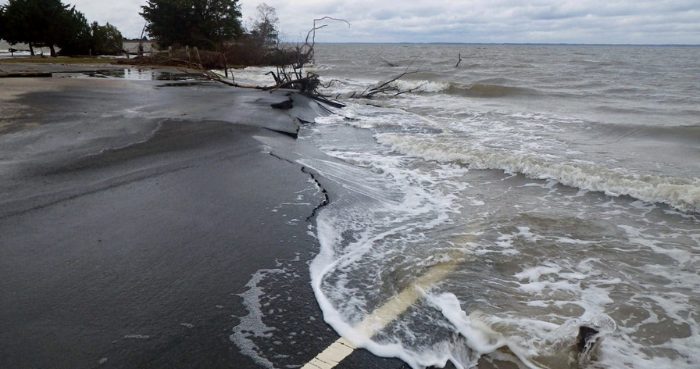
Human-driven climate change continues to raise global sea levels, worsening flooding and threatening coastal communities worldwide.
For decades, scientists struggled with a “budget gap,” a persistent discrepancy between observed sea-level change and the estimated contributions from melting ice, land water storage, and ocean expansion. Now, a breakthrough study has finally closed that gap.
Research published in Science Advances reconciles measurements from multiple instruments to clarify the sea-level budget. The comprehensive analysis breaks down the specific drivers of sea-level rise from 1960 to 2023.
The team found that the largest single contributor is the heat-driven expansion of seawater, responsible for 43% of sea-level rise since 1960. Melting ice followed closely, with mountain glaciers contributing 27%, the Greenland Ice Sheet adding 15%, and the Antarctic Ice Sheet providing 12%. A reduction in land water storage capacity accounted for the remaining 3%.
“For years, there has been a frustrating gap between how much the oceans were observed to be rising and how much we could explain,” said John Abraham, an engineer at the University of St. Thomas and study coauthor. “This work shows that, with better instruments, processes, and smarter analysis, this knowledge gap can be closed.”
Moreover, the study reveals that the rate of sea-level rise has recently doubled. While the average rise was 2 millimeters per year between 1960 and 2023, it surged to 4 millimeters per year from 2005 to 2023. This alarming acceleration is primarily driven by ocean warming, which accounts for 41% of the increase.
Researchers emphasize that maintaining detailed scientific records remains vital. With accurate data, policymakers can develop informed mitigation strategies to protect vulnerable coastal populations from future climate threats.