
Solar cell efficiency record broken by Chinese Academy of Sciences
- By Kumail Shah -
- Jul 18, 2026


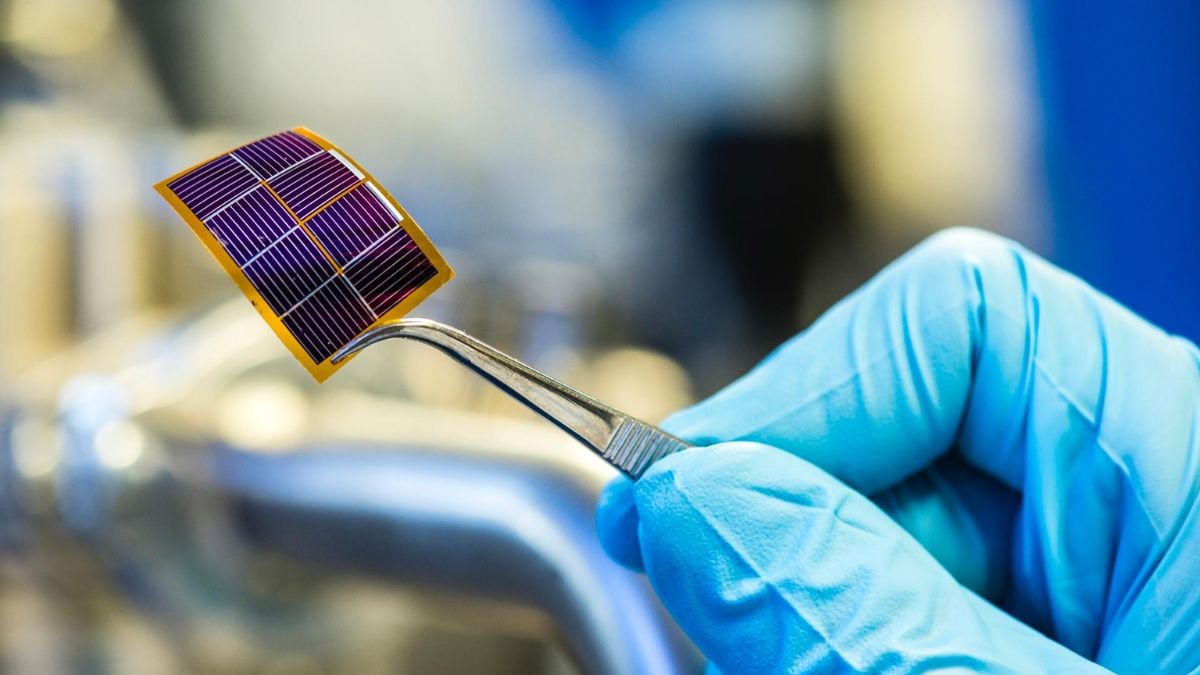
The Institute of Chemistry in the Chinese Academy of Sciences (CAS) has set a new record for solar cell efficiency, developing a perovskite-organic tandem solar cell that reached a steady-state photoelectric conversion efficiency of 28.04 percent.
The novel achievement was published in the journal Nature. It features a wide-bandgap perovskite top subcell that holds the record for the highest open-circuit voltage of its type.
When precisely integrated with an organic bottom subcell, the device demonstrated a peak laboratory power conversion efficiency of 28.80 percent, with a certified steady-state efficiency of 28.04 percent.
Notably, the cell exhibited impressive functional stability, maintaining 90 percent of its initial efficiency after 625 hours of continuous illumination.
Li Yongfang, a CAS academician who led the research team, pointed out the cell’s advantages: “This perovskite-organic tandem solar cell combines lightweight design, mechanical flexibility, and high efficiency.”
He stressed its potential beyond traditional applications, noting that its outstanding power-to-weight ratio makes it suitable for space missions, including satellites and space stations, where lighter, more efficient energy sources are important.
In recent years, new photovoltaic technologies such as perovskite and organic solar cells have advanced quickly.
Stacking these materials enables tandem cells to harness a broader range of the solar spectrum: the perovskite layer absorbs visible light, while the organic layer captures near-infrared light. This method results in higher efficiency compared to conventional single-junction solar cells.
READ MORE: China’s Moonshot AI chases ‘DeepSeek moment’ with much-hyped model
With the top perovskite layer, the problem remains. To absorb sunlight efficiently, the film needs both iodine and bromine, but over time, these elements may separate during manufacturing or under prolonged light exposure.
This phase separation reduces voltage and causes the cell’s performance to decline.
Meng Lei, a researcher at the institute and a key member of the team, explained the significance of overcoming this problem.
“This phase separation has been a critical bottleneck, severely undermining the device’s stability and commercial potential.”
To address this, the researchers added a molecule called TDB to the perovskite film. TDB helps keep iodine and bromine evenly mixed during the film’s formation. When exposed to light, TDB changes into another molecule, TAB, which settles at the edges of the perovskite grains.
This process helps prevent the elements from separating, making the solar cell more stable and better able to handle light over time.