
The Last Total Solar Eclipse: A Cosmic Farewell
- By Zaeem Basir -
- May 21, 2026


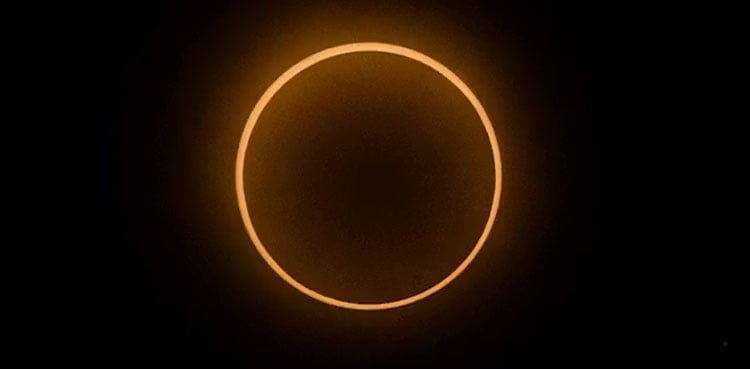
The Moon is slowly drifting away from Earth, and with it, the spectacular phenomenon of total solar eclipses will eventually disappear.
According to scientists, the Moon is moving away from our planet at a rate of 3.8 centimeters per year, causing its apparent size in the sky to decrease.
This means that in about 600 million to 1 billion years, the Moon will be too small to completely block the Sun’s disk, marking the end of total solar eclipses.
What Happens During a Total Solar Eclipse?
A total solar eclipse occurs when the Moon passes directly between the Sun and Earth, casting a dark shadow on our planet.
This rare alignment allows observers to witness the Sun’s corona, a breathtaking sight that’s only visible during these events.
The Future of Solar Eclipses
As the Moon continues to recede, total solar eclipses will become increasingly rare, eventually giving way to annular eclipses, where the Moon appears smaller than the Sun, creating a “ring of fire” effect.
The last total solar eclipse is predicted to occur around 620 million to 1.2 billion years from now.
Upcoming Solar Eclipses
If you’re eager to witness a total solar eclipse, mark your calendars for August 12, 2026, when the next one will be visible.
However, if you miss it, the next major eclipse won’t occur until August 12, 2045.