
The Odyssey Review: Nolan turns Homer's epic Into a blockbuster event
- By Izay Ayesha -
- Jul 16, 2026


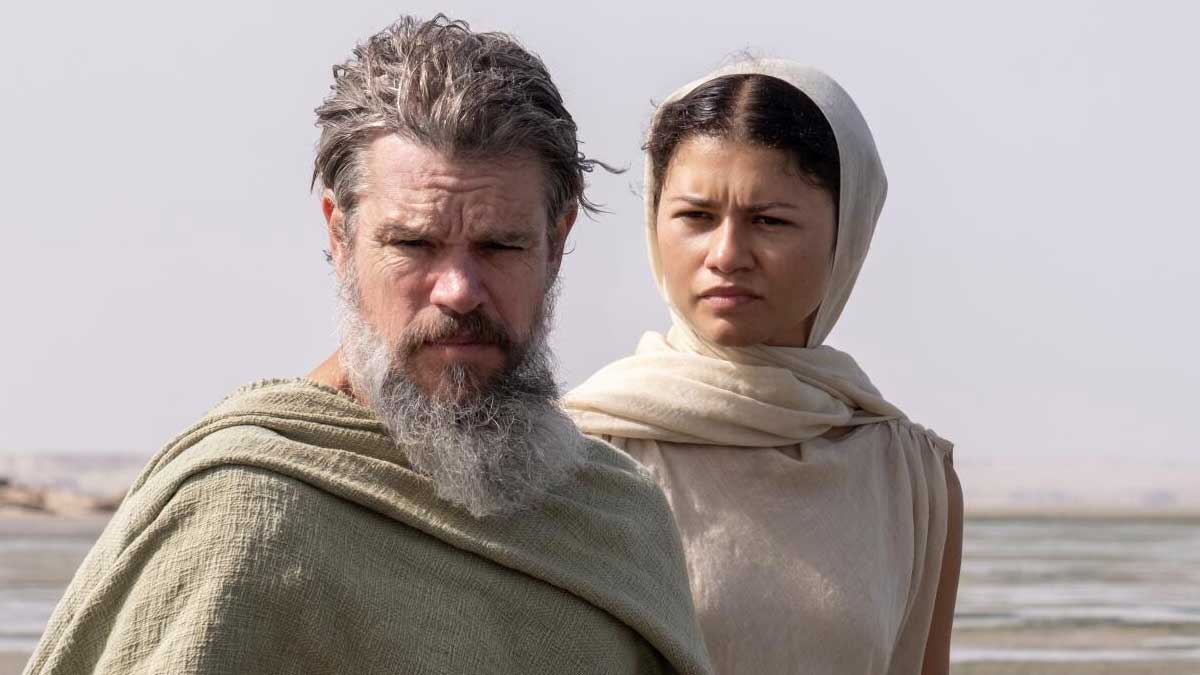
Christopher Nolan’s version of Homer’s 2,800-year-old poem is the year’s most eagerly anticipated release and, largely, it is everything you hoped for. Filmed entirely on IMAX 70mm film, The Odyssey traces Odysseus’s (Matt Damon) forty-year journey home as he seeks to reunite with his wife Penelope (Anne Hathaway) and son Telemachus (Tom Holland).
At nearly three hours, the movie never lets the momentum falter between epic set pieces and smaller domestic struggles back in Ithaca.
The critical consensus on both sides of the Atlantic is a strikingly similar one: this is Nolan on the very fringes of his ambition and pulling it off.
Performances That Make The Myth
Matt Damon brings us a version of Odysseus that has exchanged his heroism for something grittier and more complicated, a man whose resourcefulness is saving his life, but gradually costing him his soul. Robert Pattinson as Antinous is deliciously vile, while Samantha Morton is the author of one of the film’s most unsettling moments as Circe. Anne Hathaway delivers a performance as Penelope that remains controlled and steely so that she is never just a wife waiting by the window.
Charlize Theron’s Circe just adds another destination on Odysseus’s long trip home.
These are strong characters and, though it would have been easy for them to feel disparate, Nolan and his cast always keep them tethered to one central question of the cost of Odysseus’s actions on the people left behind.
Spectacle That Demands Its Scope
Critcs have been very impressed with the way The Odyssey looks and sounds. In one frequently quoted description of the film: “A gargantuan epic that doesn’t even seem to pause for breath in almost three hours.” It’s a statement that speaks volumes for the scale of the spectacle as set pieces seem designed to overwhelm you with their enormity. The cyclops confrontation, along with the tempestuous sea voyages, are particular standouts and it is clear that this is a film prioritising the weight of its action over hollow CG.
The critics have also responded favorably to the way Nolan has handled the darker and more complex aspects of Homer’s epic; issues such as loyalty, the brutal nature of war and the effects of decades away fighting have all been raised in various reviews.
The response to The Odyssey has been largely positive, becoming one of Nolan’s highest-rated movies to date. Peter Bradshaw of The Guardian gave the film 5 stars, reinterpreting Homer’s story as a metaphor for the emptiness and weariness that follows a war, calling the movie thrilling, bold, serious, generous and witty. British reviewers generally agreed, with The Telegraph stating it was “the movie of the year” and Empire calling the scope of Nolan’s directing “astounding.”
It hasn’t all been rave reviews though. The Financial Times was more critical, giving the film 4 stars and suggesting that humour and sexuality remain areas of Nolan’s filmmaking that are not yet his forte-which proves problematic, considering the sheer number of references to these two elements within Homer’s original text.
The Final Word
It can’t be said that The Odyssey is an entirely flawless adaptation, and some of the dialogue does become slightly more boisterous than the rest of the film. Yet as a piece of epic filmmaking with its roots in IMAX, it successfully meets nearly all of its aims and is supported by a Damon performance that can only be described as career-best, and a cast of actors that never let the myth overwhelm the people. For anyone who wants to witness a classical story told with scale and gravitas, The Odyssey is not to be missed.