
How US-Israeli war on Iran is upending global business
- By Reuters -
- Mar 10, 2026


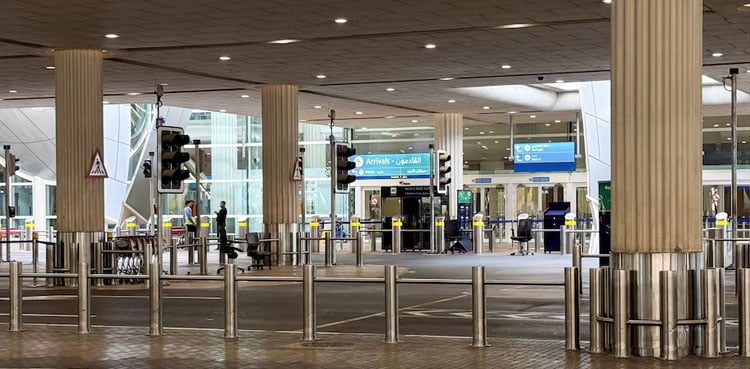
The U.S.-Israeli war with Iran is rattling businesses worldwide, driving up energy prices, squeezing supplies of critical raw materials and raising questions about the reliability of trade routes critical to the flow of goods from food to car parts.
Below are the main disruptions so far:
TRAVEL CHAOS
The war has closed much of the region’s airspace and crippled Dubai and Doha airports, two of the world’s busiest transit hubs, stranded tens of thousands of passengers and forced airlines to cancel about 40,000 flights–the travel industry’s biggest disruption since the COVID-19 pandemic.
Governments are scrambling to repatriate citizens, and airports are gradually resuming operations, but at only a fraction of normal capacity.
Private jets have emerged as an alternative for marooned travellers to get out of the Gulf whilst others have embarked on long taxi drives across the desert to Riyadh, Saudi Arabia, in the hope of flying home from there.
Shipments ranging from fresh produce to airplane parts are in limbo as Middle East conflict squeezes cargo capacity and pushes up freight rates.
AIRLINES
The shutdown of Gulf airspace rippled quickly across airline networks and battered the industry’s shares.
Prices of flights between Asia and Europe have soared, some airlines including Wizz Air and Lufthansa have changed routes, and Ryanair has seen a jump in demand for short-haul flights as Europeans stay closer to home for Easter.
Some prices of jet fuel, the second-largest expense for carriers after labour, have doubled since the start of the conflict, adding pressure on carriers.
U.S. airlines, which abandoned the practice of hedging against fuel costs, could be the hardest hit if the war is prolonged. European and Asian airlines maintain active fuel hedging strategies.
For pilots, the Iran war is making the skies even more perilous, ratcheting up pressure on those flying through them due to events from drone incursions to flight paths squeezed by conflict.
IMPACT ON DUBAI
The conflict has put at risk the Middle East’s carefully constructed image as a safe and high-end vacation hot spot after billions of investment in recent years from Abu Dhabi to Dubai. Tourism is worth some $367 billion annually to the region.
It has also laid bare how heavily global air travel relies on a handful of hubs led by Dubai, the world’s busiest international airport.
In Dubai and other major Middle Eastern shopping hubs, many stores were closed or operating with a skeleton staff last week.
DEFENSE INDUSTRY
The United States has unleashed an array of weaponry against Iranian targets, including Tomahawk cruise missiles, stealth fighters, and for the first time in combat, low-cost one-way attack drones modeled after Iranian designs.
The Pentagon also used artificial intelligence services from Anthropic, including its Claude tools, during its attack.
Last week, the Pentagon designated the AI lab a “supply-chain risk,” barring government contractors from using its technology in work for the U.S. military. That followed a months-long dispute over the company’s insistence on safeguards that the Defense Department says went too far.
U.S. President Donald Trump met executives from seven defense contractors on March 6, as the Pentagon works to replenish supplies drawn down by U.S. strikes on Iran and other recent military operations.
CRITICAL METALS AND RAW MATERIALS
Qatari smelter Qatalum began shutting down operations last week, while Aluminium Bahrain said it had halted shipments and declared force majeure because it could not move metal through the Strait of Hormuz. The Gulf region accounts for about 8% of global aluminium supply.
Aluminium prices on the London Metal Exchange jumped sharply on the news, while physical premiums in Europe and the United States climbed to multi‑year highs.
Nickel makers in Indonesia reliant on the Middle East for 75% of the sulphur they use may have to cut production as Gulf shipping is increasingly disrupted by the conflict.
FAST FASHION AND LUXURY
Shipments of garments for Zara owner Inditex and other major clothing retailers have been stranded at airports in Bangladesh and India as the conflict curbs air cargo flights.
South Asia is a clothes manufacturing powerhouse and fast fashion brands around the world rely on factories in Bangladesh, India and Pakistan for a constant stream of new T-shirts, dresses and jeans.
The crisis is also adding pressure on the luxury sector, already struggling to emerge from a slowdown in demand, with groups such as Richemont and Zegna seen among the most exposed.
CHIPS AND DATA CENTRES
South Korean officials have warned that a prolonged conflict could disrupt supplies of key semiconductor manufacturing materials sourced from the Middle East, including helium, which is essential for chip production and has no viable substitute.
Drone strikes that damaged some of Amazon’s data centres in the United Arab Emirates and Bahrain raised questions about technology supply chains and Big Tech’s pace of expansion in the region.