
What is Pakistan Telecommunication Amendment Bill 2026 that sparked property rights concerns
- By Hamid Ur Rehman -
- Jun 19, 2026


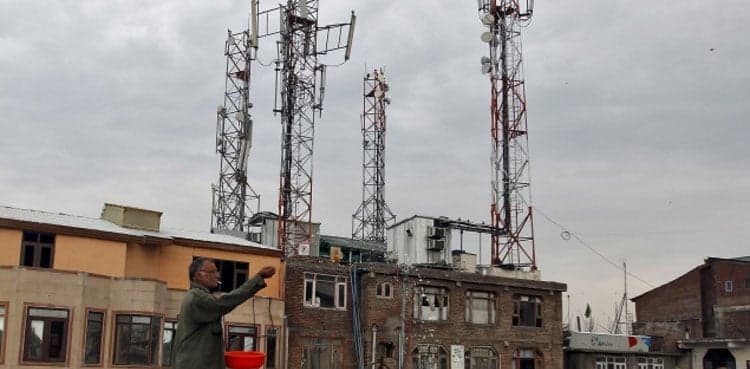
ISLAMABAD: The Pakistan Telecommunication (Re-organisation) (Amendment) Bill, 2026, recently proposed by Federal Minister for Information Technology and Telecommunication Shaza Fatima Khawaja, has sparked debate over its potential impact on private property rights across the country.
The proposed legislation seeks to amend the Pakistan Telecommunication (Re-organisation) Act, 1996, and includes provisions aimed at accelerating digital connectivity, expanding fibre-optic networks, and streamlining the deployment of telecom infrastructure.
Key Amendments
Among the most debated provisions are the proposed Sections 27-A and 27-B, which deal with the installation of telecommunications infrastructure on private and public property.
According to the proposed framework, telecommunications operators may seek access to any private property for the installation, deployment, operation, maintenance, or upgrading of communication infrastructure, including fibre-optic networks, telecom towers, generators, equipment, and related facilities.
Critics argue that the proposed provisions could significantly limit the ability of property owners to refuse such installations on their land.
Under the draft law, disputes between telecom operators and property owners would first be subject to negotiations.
The property owner would have 30 days to respond. If no agreement is reached, the telecom operator may issue a reminder notice, after which the matter could be referred to a designated government official for resolution. The official would announce the decision and would also determine the compensation or rent payable for the use of the property.
The decision would be binding, and failure to comply could result in hefty penalties for the land owner, including fines of up to Rs50 million under certain circumstances.
The bill also states that telecom companies may install their equipment in public parks and other public properties without charge to facilitate network expansion.
Concerns Over Property Rights
The proposed amendments have drawn criticism from some commentators and lawmakers who argue that the provisions could conflict with constitutional protections related to private property.
Senior journalist and ARY News anchor Mohammad Malick argued that the proposed legislation infringes upon rights guaranteed under the Constitution.
Mohammad Malick also questioned whether the bill provides sufficient safeguards for property owners, arguing that citizens should retain the right to decide how their land is used.
“If this bill is passed, neither our choice, nor our home, nor our land will truly remain ours,” he said.
Critics contend that compulsory access provisions, even when accompanied by compensation mechanisms, may weaken the principle that property rights are protected under the Constitution.
The issue was also raised during a meeting of the Senate Standing Committee on Information Technology and Telecommunication, where lawmakers expressed concerns about access to private land, the placement of telecom towers, and penalties related to the denial of right-of-way permissions.
Committee members emphasized that no individual should be compelled to allow telecommunications infrastructure on private property without clear legal protections, transparent procedures, and mutually agreed arrangements.
Government’s Position
During the committee meeting, officials from the Ministry of Information Technology and Telecommunication rejected concerns that the bill would authorize the forced acquisition or occupation of private property.
Officials informed the committee that the proposed amendments are intended to streamline right-of-way permissions, improve dispute resolution mechanisms, and support Pakistan’s digital connectivity goals.
The ministry maintained that private ownership rights would remain protected and that infrastructure deployment would continue to be subject to legal procedures, compensation arrangements, and defined dispute-resolution mechanisms.
Officials also assured lawmakers that any provisions creating ambiguity would be reviewed and refined before the legislation proceeds further.
The ministry added that notice requirements, hearing procedures, and administrative review mechanisms have been incorporated into the proposed framework to ensure transparency and accountability.
Senate Committee Review Continues
The Senate Standing Committee on Information Technology and Telecommunication, chaired by Senator Palwasha Mohammad Zai Khan, held extensive discussions on the bill with participation from lawmakers, ministry officials, and other stakeholders.
Members also reviewed governance-related provisions concerning institutional restructuring and regulatory powers under the proposed framework.
Following detailed deliberations, the committee deferred further consideration of the bill and decided to continue its clause-by-clause review at a future meeting.
The proposed legislation remains under parliamentary scrutiny as lawmakers seek to balance Pakistan’s digital infrastructure needs with constitutional protections for private property owners.