
Sindh govt rejects global survey ranking Karachi among world's least-liveable cities
- By Hamid Ur Rehman -
- Jul 10, 2026


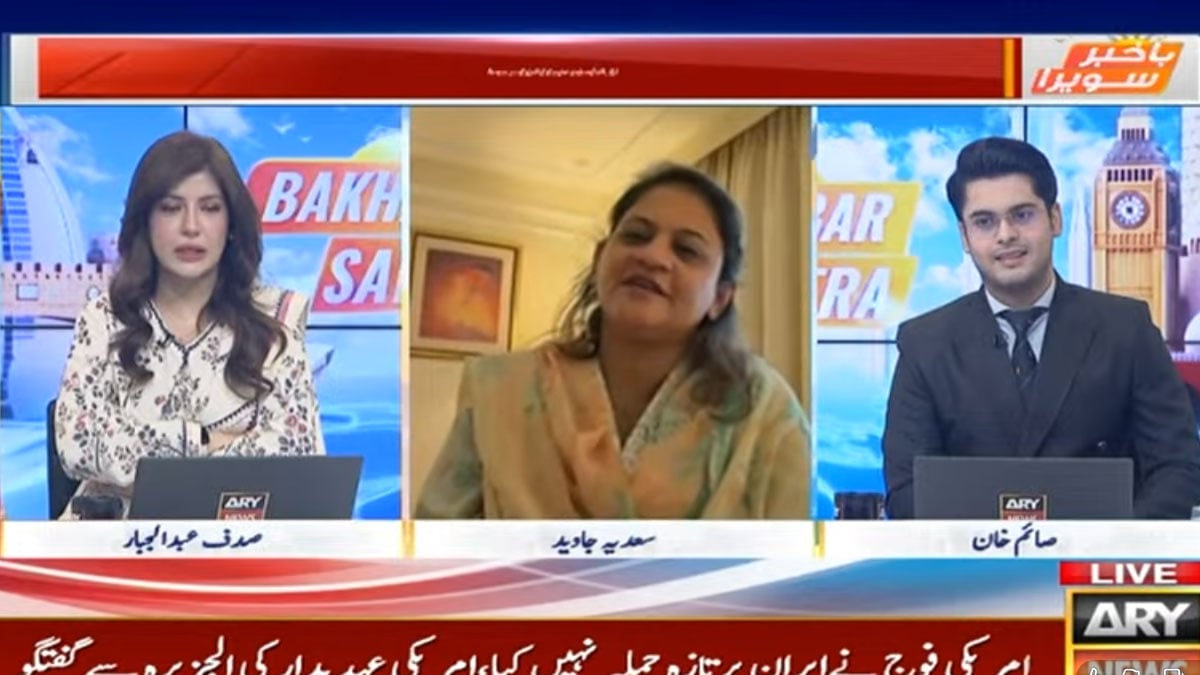
KARACHI: Sindh Government spokesperson Sadia Javed on Friday rejected the Economist Intelligence Unit’s (EIU) Global Liveability Index 2026, which ranked Karachi among the world’s least-liveable cities.
According to the EIU’s annual survey, Karachi was placed 170th out of 173 cities, with only Dhaka, Tripoli and Damascus ranking lower. The report also ranked Tehran at 164th and Kyiv at 166th.
The Global Liveability Index evaluates 173 cities worldwide based on five key indicators: stability, healthcare, culture and environment, education, and infrastructure. The EIU said factors such as traffic congestion and crime negatively affect the rankings of many large cities.
Speaking on ARY News’ programme Bakhabar Savera, Sadia Javed said she “completely disagrees” with the survey and questioned the methodology used to compile the rankings.
Sadia Javed questions EIU’s criteria
“I don’t know what criteria and benchmarks they adopted for conducting this survey,” she said.
Javed argued that Karachi continues to attract people from across the country, questioning how it could be considered unliveable when, according to her, nearly 500,000 people move to the city every year in search of better education, healthcare and employment opportunities.
Karachi has largest healthcare infrastructure
Highlighting the Sindh government’s performance in the health sector, she claimed Karachi has the country’s largest public healthcare infrastructure and said significant investments have been made to improve medical facilities.
New York City Subway is very dirty
Responding to demands for a mass transit system similar to the New York City Subway, Javed said she had personally travelled on the New York subway and found it “very dirty,” adding that she would not choose to travel on it again.
Addressing criticism over Karachi’s lack of an efficient public transport system, water shortages and deteriorating road infrastructure, Javed acknowledged delays in transport projects but said work on the Red Line and Yellow Line Bus Rapid Transit (BRT) projects is progressing rapidly.
No need for Health Card
She also defended the provincial government’s healthcare policy, saying there is no need for a health card in Karachi because treatment is provided free of charge at several major public hospitals, including the National Institute of Cardiovascular Diseases (NICVD), Jinnah Postgraduate Medical Centre (JPMC), Sindh Institute of Urology and Transplantation (SIUT), National Institute of Child Health (NICH), and Civil Hospital Karachi.
Child loses life after falling into manhole in Karachi
To support her claim about the quality of public healthcare, Javed said Sindh Senior Minister Sharjeel Inam Memon received treatment at NICVD Hyderabad after suffering a heart ailment, while President Asif Ali Zardari has also sought treatment at public hospitals in Sindh.
She added that she herself gets members of her family treated by doctors at Jinnah Hospital and Civil Hospital Karachi.
Water crisis
On Karachi’s persistent water crisis, Javed acknowledged that residents have genuine complaints regarding water supply.
She said water tankers should not be the primary source of supply and that every household should receive water through the city’s pipeline network. She added that work is underway to improve Karachi’s water distribution system.
Saim Khan’s personal experience at Jinnah Hospital
During the programme, anchor Saim Khan shared his personal experience, saying he had visited Jinnah Hospital a week earlier and found that no doctor was available after 2:00pm.