
Pakistan passport: DGIP urges citizens to contact helpline, citizen portal for assistance
- By Sheeraz Soomro -
- Jul 16, 2026


The Directorate General of Immigration and Passports (DGIP), operating under the Ministry of Interior, Government of Pakistan, has reaffirmed its commitment to delivering accessible, reliable, and citizen-centric passport services for Pakistanis residing both within the country and abroad.
To facilitate applicants and ensure prompt resolution of passport-related issues, the DGIP has encouraged citizens to use its official support channels for information, assistance, feedback, and complaint registration.
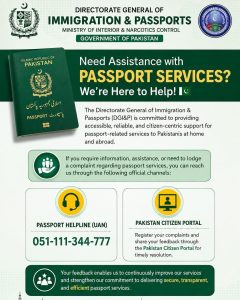
Individuals seeking guidance on passport services can contact the Passport Helpline (UAN) at 051-111-344-777. Additionally, citizens can submit complaints and provide feedback through the Pakistan Citizen Portal, enabling timely resolution of service-related concerns.
The department asserted that public feedback plays a vital role in improving service delivery and strengthening its commitment to providing secure, transparent, and efficient passport services.
The DGIP reiterated its dedication to enhancing customer experience by ensuring that citizens have convenient access to official assistance and effective grievance redressal mechanisms.
Read more: Getting e-passport from home set to become easier in Pakistan
Meanwhile, Pakistan has decided to gradually phase out traditional machine-readable passports (MRPs) and replace them with a fully integrated e-passport system, allowing citizens to apply for passports, pay fees online and receive the document at their doorstep.
Director General of Passports Muhammad Abdul Khaliq said the move is aimed at modernising the country’s travel document system and streamlining passport services through digital technology.
Speaking on ARY News’ programme Bakhabar Savera, Khaliq said Pakistan issued its first e-passport in 2022, but the system at the time was not fully integrated with international e-gates.
He said the system was upgraded in 2025 and now meets international standards. The new e-passports incorporate laser engraving technology and digital security certificates, making them significantly more resistant to forgery.