
Pakistan introduces new cost-effective Hajj Savings Scheme: Key details
- By Web Desk -
- Jul 28, 2026


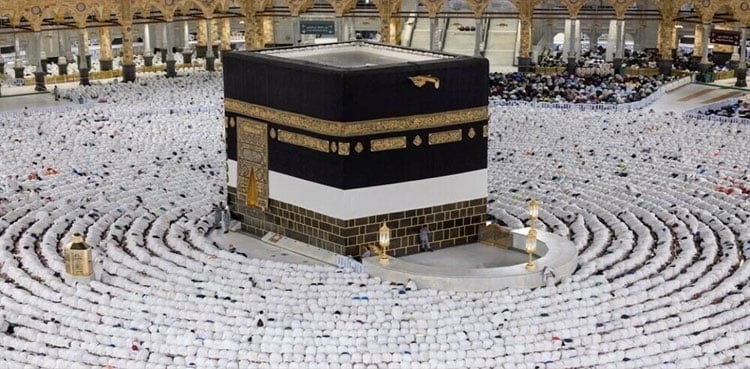
ISLAMABAD: In a landmark move, the Ministry of Religious Affairs and Interfaith Harmony has introduced a comprehensive 16-page multi-year Hajj Policy and Plan covering 2027 to 2030 aimed at ensuring long-term stability, transparency, and cost efficiency in Hajj operations.
Under the new policy framework, Pakistan will seek three- to four-year contracts in Saudi Arabia for key services, including air travel, accommodation, transportation, catering, and baggage management, to reduce costs and improve operational planning.
Hajj quota
The policy allocates 60% of the total Hajj quota to the Government Scheme, while 40% will be assigned to private Hajj operators.
Cashless transactions
The ministry has also abolished paper-based cash transactions, with all financial dealings to be conducted through the State Bank of Pakistan and integrated digital payment portals.
Hajj Savings Scheme
To facilitate pilgrims, the government is introducing a multi-year registration system along with a Hajj Savings Scheme. Under the scheme, applicants can deposit 10% of the estimated Hajj cost to secure priority registration for their preferred travel year on a first-come, first-served basis.
Government scheme pilgrims will have the option to choose between a 38-to-42-day standard package and a 20-to-25-day short package. Any operational surplus remaining after the completion of Hajj operations will be refunded directly to pilgrims.
Women pilgrims
The new policy also introduces social and regulatory reforms. Women will be allowed to perform Hajj without a male guardian (Mahram), subject to submission of an official undertaking.
Religious Ministry issues key advisory on passport renewal for Hajj 2027
For private Hajj operators, strict anti-monopoly measures have been introduced. The buying, selling, or sub-letting of Hajj quotas has been prohibited to prevent cartelization.
Private operators will be required to register with the Securities and Exchange Commission of Pakistan (SECP), process pilgrim data through the official Private Hajj Management Portal, maintain required capital reserves, and provide a 5% performance guarantee to obtain a three-year licence.
Companies failing to meet the minimum quota of 2,000 pilgrims will be deactivated, with half of their security deposit forfeited, while their pilgrims will be transferred to other operators.
The policy places special emphasis on pilgrim welfare, safety, and preparedness. Mandatory training programmes will cover Hajj rituals, Saudi laws, health and hygiene measures, and the use of relevant mobile applications.
Welfare assistants (Moawineen) will be appointed strictly on merit under guidelines approved by the Cabinet Committee on Private Hajj Policy.
Financial protection for pilgrims has also been included through the Takaful-based Hujjaj Muhafiz Scheme, funded by a non-refundable fee of Rs1,000. The scheme will provide Rs2 million to families of pilgrims who die during Hajj and Rs250,000 for emergency medical evacuation.
The policy also establishes an Emergency Response Team under the Director-General of Hajj to manage crisis situations. The federal minister has been empowered to make necessary adjustments in the policy in line with changing directives from Saudi authorities.