
36% of packaged edible oil, ghee, milk in Pakistan substandard: PCSIR
- By Shoaib Nizami -
- Aug 08, 2026


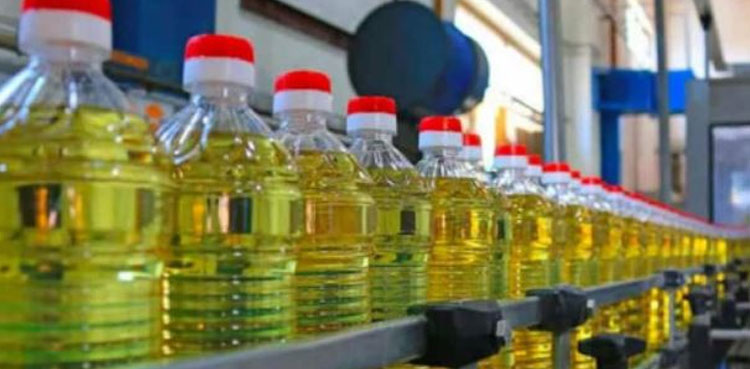
ISLAMABAD: A laboratory assessment conducted by the Pakistan Council of Scientific and Industrial Research (PCSIR) has found that 36% of packaged edible oil, ghee and milk samples tested in Pakistan failed to meet prescribed national quality standards.
The revelation came in a meeting of the National Price Monitoring Committee (NPMC) chaired by Federal Minister for Planning, Development and Special Initiatives Prof. Ahsan Iqbal to review the country’s inflation outlook, food quality standards and price trends of essential commodities.
The committee reviewed the findings of a laboratory assessment of packaged edible oil, ghee and milk products conducted on the directions of the planning minister to scientifically evaluate the quality of commonly consumed food items.
The assessment report was presented by the Ministry of Science and Technology through the Pakistan Council of Scientific and Industrial Research (PCSIR), while the consolidated findings were prepared by the Pakistan Standards and Quality Control Authority (PSQCA).
Taking serious notice of growing public concerns over the increasing incidence of cardiovascular diseases and other non-communicable illnesses, particularly among younger Pakistanis, Prof. Ahsan Iqbal directed all provincial governments, regional administrations and relevant regulatory authorities to conduct a comprehensive nationwide survey of loose (unpackaged) edible oil, ghee and milk being sold across the country.
The laboratory assessment revealed significant concerns regarding the quality of packaged food products available in the market.
A total of 491 samples of packaged edible oil, ghee and milk products were collected and tested by PCSIR, with the consolidated findings submitted by PSQCA. Of these, 315 samples conformed to the prescribed national quality standards, while 176 failed to meet the required specifications, indicating a non-conformance rate of approximately 36%.
The report showed that 98 of 204 Banaspati ghee samples, 40 of 146 blended cooking oil samples, 26 of 104 packaged liquid milk samples, eight of 18 milk powder samples, three of four refined palm oil samples, and one of 13 refined canola oil samples failed to conform to the prescribed standards.
Officials informed the meeting that the report had been consolidated by PSQCA following laboratory analysis conducted by PCSIR and submitted for policy consideration.
Pakistan’s weekly inflation rises 0.28%
To ensure a thorough scientific evaluation of the findings, the planning minister constituted a specialised technical subcommittee comprising experts from the Ministry of Planning, PCSIR and PSQCA. The subcommittee will critically analyse the laboratory findings and submit evidence-based recommendations to the committee for appropriate regulatory and policy action.
A detailed briefing by the Pakistan Bureau of Statistics (PBS) informed the committee that headline inflation declined to 9.2% in July 2026, compared with 11.1% in the previous month, reflecting a continued easing of inflationary pressures.
The committee was informed that natural gas remained the largest contributor to inflation, while housing, wheat flour, fresh milk and petrol continued to exert upward pressure on prices.
Expressing concern over significant wholesale-retail price differences observed across various cities, the planning minister noted that consumers were often paying substantially different prices for the same commodities despite common sources of supply.
He directed provincial governments and district administrations to investigate the factors contributing to these market distortions and propose practical measures to reduce wholesale-retail price gaps, improve market transparency and ensure that essential commodities are available to consumers at fair prices.