
Tsunami survivor battles wildfire to protect hometown in Japan's northeast
- By Reuters -
- Apr 27, 2026


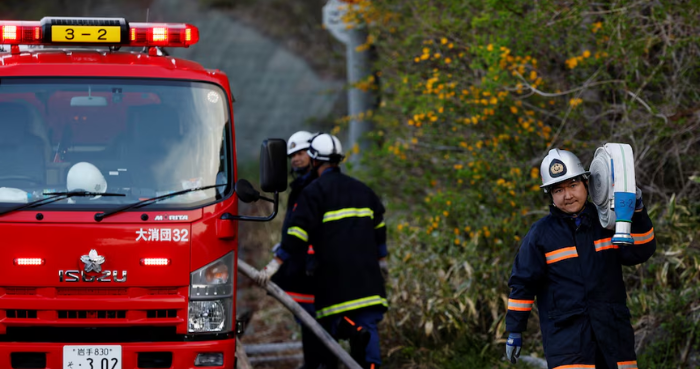
OTSUCHI: Ryota Haga was in high school when the biggest earthquake ever recorded in Japan triggered a deadly tsunami and swept away his family’s home in the quiet northeastern town of Otsuchi in March 2011.
Now 31 with a wife and toddler, the volunteer firefighter faces another natural disaster: this time a wildfire raging for a sixth day and threatening his community after burning through more than 1,600 hectares of forest as of Monday morning.
“It’s been 15 years since the (Great East Japan) Earthquake, and our lives were finally beginning to settle down,” Haga said at the end of another draining day battling the blaze on Sunday.
“We can’t let people lose what is precious to them all over again. The fire is spreading and our exhaustion is at a limit, but it’s our hometown. We will protect it at all costs, even if it feels like we’re running on empty.”
Otsuchi was among the hardest-hit coastal towns in 2011, when a tsunami estimated around 10 metres (33 ft) high swept through the small fishing town. Nearly 1,300 residents, or about a tenth of its population, perished, including its mayor.
The scale of the current fire is nothing that Haga has ever experienced, he said. Some 1,400 firefighters and dozens of Self-Defense Force personnel have been deployed so far, with no prospects yet of bringing the blaze under control despite some scattered rain forecast on Monday.
While Japan has experienced relatively few large-scale wildfires compared with other parts of the world, climate change has increased their frequency, especially as the early spring months before the humid rainy season have been hot, dry and with winds that can whip up flames. On Sunday, another wildfire started in Fukushima, also in Japan’s northeastern region.
For Haga, the increasing instances of wildfires have added to a longer-term concern over the acute shortage of firefighters as the population declines and ages. Already, the fire brigade he belongs to is below the staffing level set by authorities, he says.
“If a forest fire breaks out when I’m in my 50s or 60s, and I’m the one gasping for breath while trying to fight it, I don’t think we’ll be able to stop it,” he said.
Still, Haga grasps onto the hope that the firefighters’ single-minded determination to save the community will not be wasted.
“The next generation might be inspired to join the volunteer fire brigade.”