
Yuma Kagiyama's 'Turandot' programme highlights music's impact in figure skating
- By Reuters -
- Jan 29, 2026


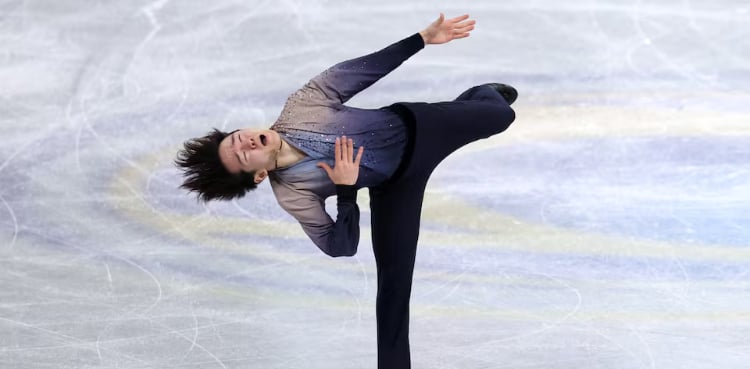
When Japanese skater Yuma Kagiyama launches into his free programme under the Olympic lights at the Milano Cortina Games next month, the sweep of “Nessun dorma” is sure to strike a chord with the Italian crowd — a return to the city of Turandot’s premiere on its 100th anniversary.
In figure skating, music is not simply accompaniment — it is the emotional engine of the programme, shaped by pacing and physical timing of every element with the potential of electrifying an arena.
Kagiyama, a medal favourite in men’s singles, will skate to composer Christopher Tin’s bespoke four‑minute edit of his own Turandot ending, a version tailored in collaboration with choreographer Lori Nichol to meet the precise rises, rests and crescendos the sport demands.
Tin and his family will be in the Milano Ice Skating Arena cheering Yuma Kagiyama on.
“It’s probably the coolest thing that’s ever happened to me,” Tin told Reuters.
“To have this big showcase moment for this new recording to come out 100 years after the premiere of Turandot, in the city in which Turandot premiered, at the biggest global event in the world — I can’t think of one bigger.”
The Californian is a two-times Grammy Award winner, and has numerous video game industry and songwriting awards to his name.
His foray into opera came when Francesca Zambello, the Washington National Opera’s (WNO) artistic director, heard her son playing the video game “Civilization VI” in his bedroom. Tin had composed the game’s theme music.
Zambello contacted Tin about composing opera and the result was the WNO’s Turandot ending in 2024 by Tin and playwright and producer Susan Soon He Stanton.
Giacomo Puccini died in 1924 before completing Turandot and there have been five different endings since, including Tin’s.
100th ANNIVERSARY OF TURANDOT’S PREMIERE
Tin’s connection to figure skating began as a message from Carolina Kostner. The Italian world champion explained that well-known skating choreographer Lori Nichol had become an ardent advocate for his work.
Soon Tin and Nichol were trading messages. Tin loved the idea of his music accompanying an Olympic programme. Nichol loved the idea of Tin’s Turandot ending in front of a passionate Italian crowd.
“She told me she had a skater, Yuma Kagiyama, looking for music,” he said. “With the 100th anniversary of Turandot’s premiere, there would probably be a lot of ‘Nessun dorma’ but wouldn’t it be great if we had a version that had the melody but was fresh and brand new? ‘Your new ending fits that bill perfectly.'”
“Of course, I lost my mind and said, yes, yes, I want to make this happen.”
They recorded it over two days at Abbey Road Studios in London, with the Royal Philharmonic Orchestra and the English National Opera Chorus, and then added soloists Grammy-winning soprano Christine Goerke and tenor Clay Hilley.
Then came the surgical work with Nichol: shaping the 18-minute operatic finale into four minutes 17 seconds of competitive precision. They spent hours on the phone, mapping music to elements.
“You have to place certain things in certain parts of the programme and the skaters need to rest in certain parts too,” Tin said.
HOT FAVOURITE MALININ TAKES DIFFERENT APPROACH
Kagiyama’s programme will not feature the only bespoke music in Milan in a sport that is both technical athletic pursuit and performative art form.
American Ilia Malinin, the red-hot favourite for men’s singles gold, has taken a strikingly different approach to his free programme.
Entitled “A Voice,” Malinin’s own voice plays over the soundtrack, with lines such as “The only true wisdom is in knowing you know nothing” and “Embrace the storm,” making it feel like a meditation on navigating pressure and possibility at this stage of his career.
Canadian ice dancer Paul Poirier, twice world silver and bronze medallist with partner Piper Gilles, said the right score is the spine of the story.
“It is the foundation of everything — the movement, the choreography and of the emotional arc of the programme. Everything that we do in the programme is completely connected to the music,” Poirier told Reuters.
He and Gilles have resurrected their free dance from seven years ago to “Vincent” (“Starry Starry Night”), the Don McLean hit song but covered by British duo Jack Rose and Dominik Sky, who make up Govardo and with whom the skaters have become friends.
“The original conception of this programme and creating this piece of music with Govardo as a collaborative process is something really unique in our sport,” Poirier said. “That’s what makes us so connected to this piece of music.”
Elsewhere, the pull of film music is strong.
Reigning Olympic ice dance champion Guillaume Cizeron of France, who is expected to challenge for gold in Milan with new partner Laurence Fournier Beaudry, was floored by the soundtrack to “The Whale” since seeing the 2022 movie.
“The music was so beautiful,” Cizeron said. “But it’s a tricky piece — it is a very slow build-up. I had no idea how to use that for anything skating‑related.”
Then he watched Swiss great Stephane Lambiel skate to it in exhibition shows “and it brought me to tears. I thought ‘I have to skate to this one day.'”
Cizeron and Fournier Beaudry worked with Lambiel, who is now a choreographer, to help develop their breathtaking lyrical free dance programme to “The Whale” soundtrack.
Whether it is Yuma Kagiyama skating to a reimagined Puccini, ice dancers building narratives from film scores or skaters like Malinin giving voice to their inner world, music could shape the defining moments more powerfully than ever before in Milan.