
NA passes Finance Bill 2026-27, rejects opposition amendments
- By Web Desk -
- Jun 23, 2026


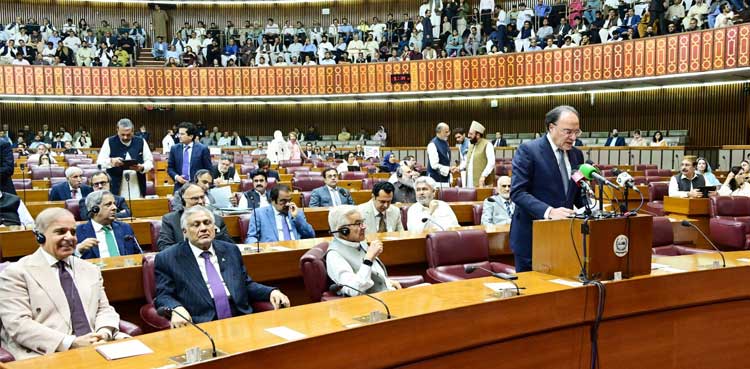
Islamabad: The National Assembly on Tuesday passed the Finance Bill 2026-27 after a clause-by-clause consideration, rejecting all amendments moved by the opposition.
Minister for Finance and Revenue Senator Muhammad Aurangzeb moved the motion for consideration to give effect to the federal government’s financial proposals for the fiscal year beginning July 1, 2026.
The motion was approved by a majority vote, paving the way for the passage of the Finance Bill 2026-27 following detailed deliberations in the House.
The federal budget for fiscal year 2026-27 carries a total outlay of Rs18.77 trillion and targets an economic growth rate of 4.0 percent.
Inflation has been projected at 8.2 percent, while the fiscal deficit is estimated at 3.6 percent of GDP. The government expects to achieve a primary surplus of 2.0 percent of GDP during the next fiscal year.
The Federal Board of Revenue (FBR) has been assigned a tax collection target of Rs15.264 trillion, reflecting a significant increase compared to the previous fiscal year.
Read more: Govt proposes sweeping tax changes in Finance Bill effective from July 1
According to budget documents, net federal revenues are estimated at Rs11.752 trillion, while total expenditures are projected at Rs18.77 trillion. Of the total expenditure, approximately Rs8.05 trillion has been allocated for debt servicing and interest payments.
The government has earmarked Rs1 trillion for the Federal Public Sector Development Programme (PSDP), while the overall national development programme has been estimated at around Rs3.675 trillion.
The budget also includes substantial allocations for pensions, civil administration, subsidies, and social protection programmes.
An allocation of Rs838 billion has been made for the Benazir Income Support Programme (BISP), marking a significant increase from the previous year.
The government has proposed a 7 percent increase in the salaries of federal government employees, along with a corresponding increase in pensions. Additional relief measures have also been announced for public sector employees and armed forces personnel.