The rains that began in June have unleashed powerful floods across the country, washed away swathes of vital crops and destroyed more than a million homes.
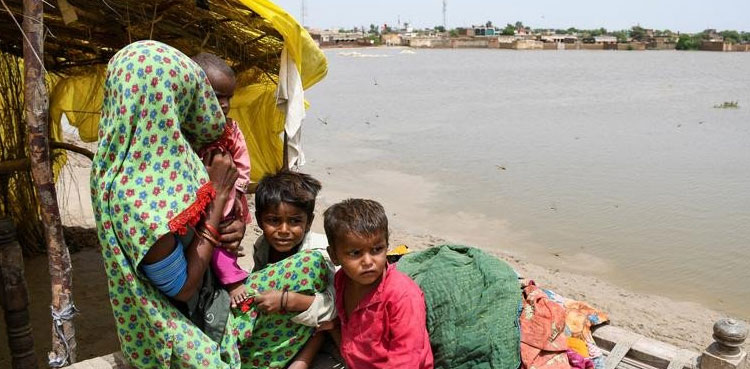
Hundreds of thousands of displaced people are in urgent need of shelter, food and clean water, with the threat of more flooding hitting parts of country in coming days, especially Sindh.
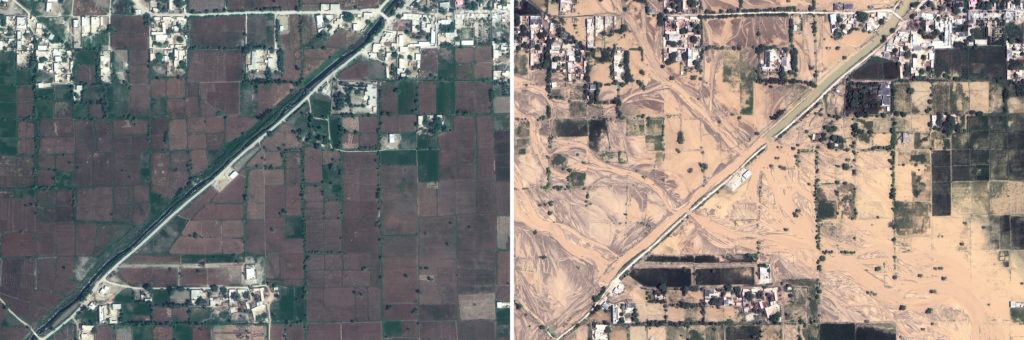
This combination of satellite images released by Maxar Technologies on August 30, 2022 shows an area of farmland on April 4, 2022 (L) and on August 30, 2022 (R) after floodwaters inundated land in Gudpur, Punjab Province, Pakistan. -AFP
Pakistan has had eight rounds of widespread rain this monsoon season, about double the normal amount, the Pakistan Metrological Department (PMD) said in its report.
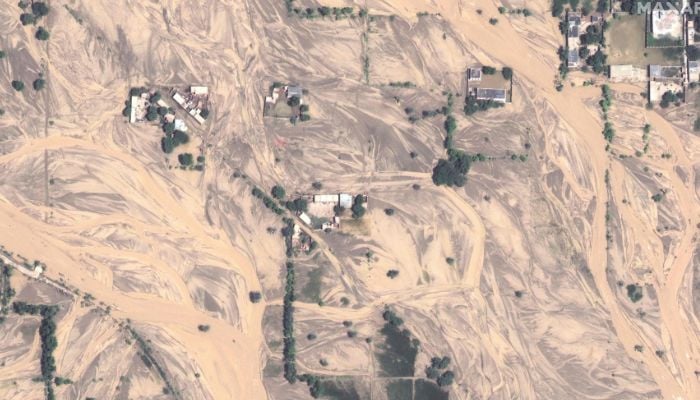
This satellite image released by Maxar Technologies, shows the damaging floods in and around Gudpur, Pakistan on August 30, 2022.— AFP
The country has experienced 190 percent more rainfall than average from the beginning of June to the end of August.
As the Indus River swelled from the steady precipitation and glaciers melted, low-lying areas were devastated.
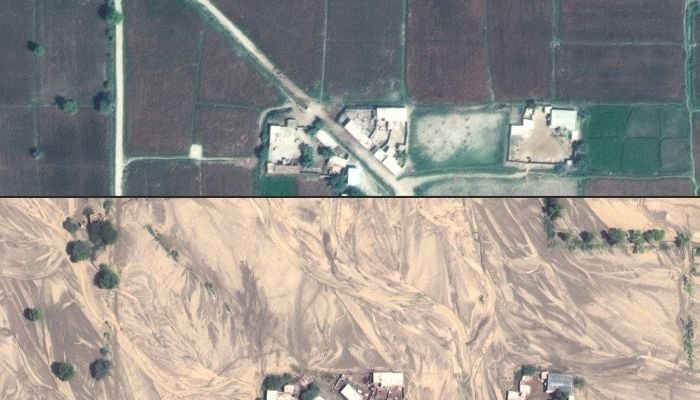
This combination of Maxar satellite images created on August 30, 2022 shows the before/after images of the damaging floods in and around Gudpur, Pakistan.— AFP
According to official stats, 90% of crops in Sindh and 45% of the country have been damaged by floods. Initial estimates suggest that the floods have caused damage of around $10 billion.
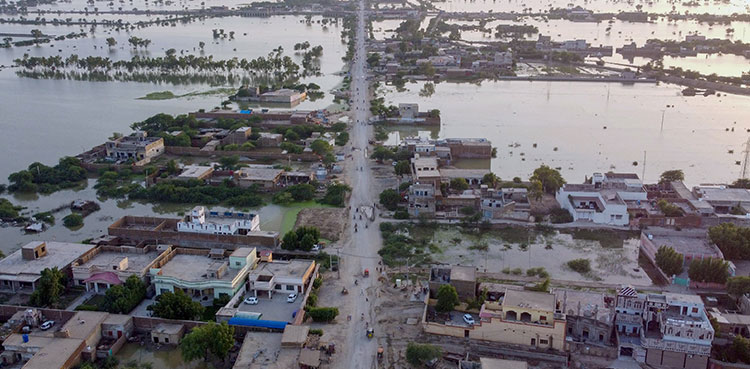
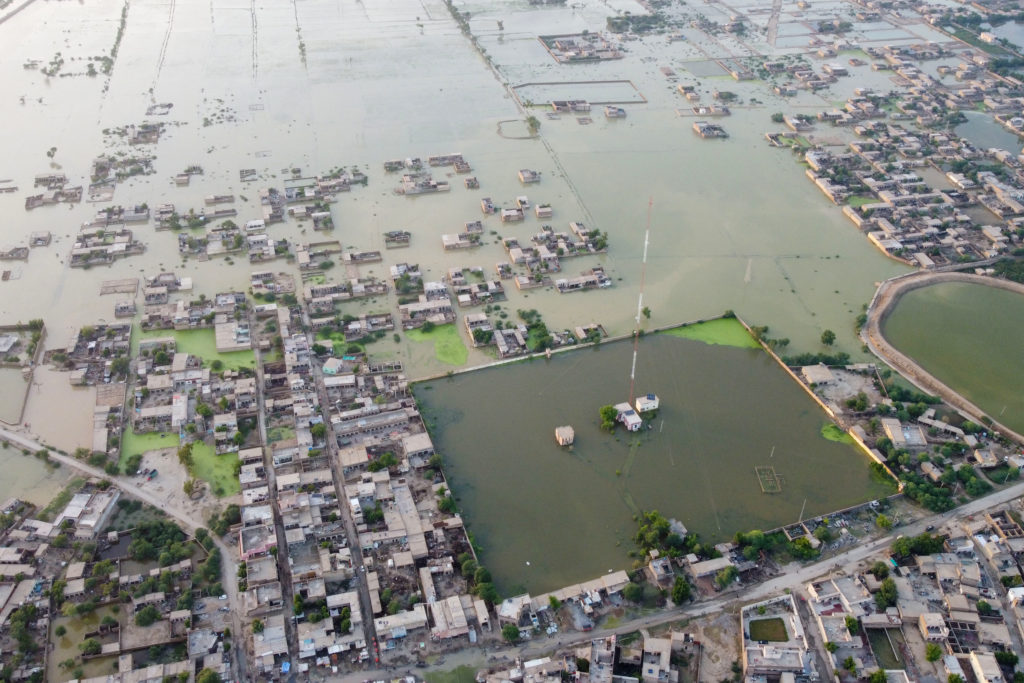
This aerial photograph taken on September 1, 2022 shows flooded residential areas after heavy monsoon rains in Dera Allah Yar town of Jaffarabad district, Balochistan province. AFP
Pakistan has approached G-20 countries for relief in debt payments as the country faces devastating floods.
The United Nations (UN) issued a flash appeal for $160 million to help Pakistan cope with catastrophic floods that have killed more than 1,100 people and affected 33 million people.